
On Samhain, the Cait Sìth walked among the living. Communities left saucers of milk to earn its blessing — or face its curse. The origin of the Halloween black cat.
On the eve of Samhain, when the boundary between worlds grew thin, a saucer of milk at the threshold was all that stood between a household and the displeasure of the Cait Sìth.
On the last evening of October, as darkness settled over the Highland landscape from the Cairngorms to the Atlantic seaboard, a quiet transaction took place at the threshold of every household. A saucer of milk was set upon the doorstep. No words were spoken over it. No ceremony attended its placement. The offering was made simply, deliberately, and with the understanding that something was expected in return — or, more precisely, that something terrible would follow its absence. This was the Samhain (pronounced “SAH-win”) milk saucer tradition, and its intended recipient was the Cait Sìth (pronounced “caught shee”), the spectral fairy cat of Scottish Highland folklore.
The tradition represents one of the most direct and transactional relationships between a Highland community and a supernatural being documented in Gaelic folklore. It was not worship. It was not supplication. It was a negotiation conducted annually at the moment when the boundary between the mortal world and the Otherworld was believed to be at its thinnest, and its terms were stark: comply, and your household prospers through the winter; refuse, and suffer the consequences.
The Foundation’s records document the milk saucer tradition across the full breadth of the Scottish Highlands, from communities in Caithness and Sutherland to the remote townships of the Outer Hebrides and the settled parishes of Easter Ross. What emerges is a practice of remarkable consistency — varied in its local details but unified in its core logic and observed with a seriousness that transcended mere custom.
What Is Samhain?
To understand the milk saucer tradition, one must first understand Samhain itself. Samhain was not merely a seasonal marker. It was the hinge of the Celtic year — the point at which the old year ended and the new year began, a transition understood not as an abstract calendrical event but as a cosmological rupture. The Gaelic-speaking peoples of Scotland and Ireland held that at Samhain, the boundary between the world of the living and the Otherworld — the realm of the Aos Sì (pronounced “ees shee”), the dead, and the unborn — dissolved.
The thinning of the veil, as later writers came to describe it, meant that beings from the Otherworld could pass into the mortal world with unusual ease. The fairy folk moved freely. The dead could return to visit their former homes. Creatures that at other times of year remained confined to the margins — to the deep glens, the high corries, the uninhabited moors — came close to human settlement. Among these creatures, the Cait Sìth was regarded as one of the most active and most dangerous.
Samhain fell on the night of 31 October and the day of 1 November, though in Gaelic reckoning the festival began at sunset on the 31st, as days were measured from sundown to sundown. The period of supernatural permeability was understood to extend for several days on either side of the festival, but the night of Samhain Eve itself was the apex — the moment of maximum exposure, when the barriers that normally kept the Otherworld at bay were at their weakest.
“Samhain was not a night. It was a door, and anything might walk through it.” — Oral tradition, Strathglass, collected 1908
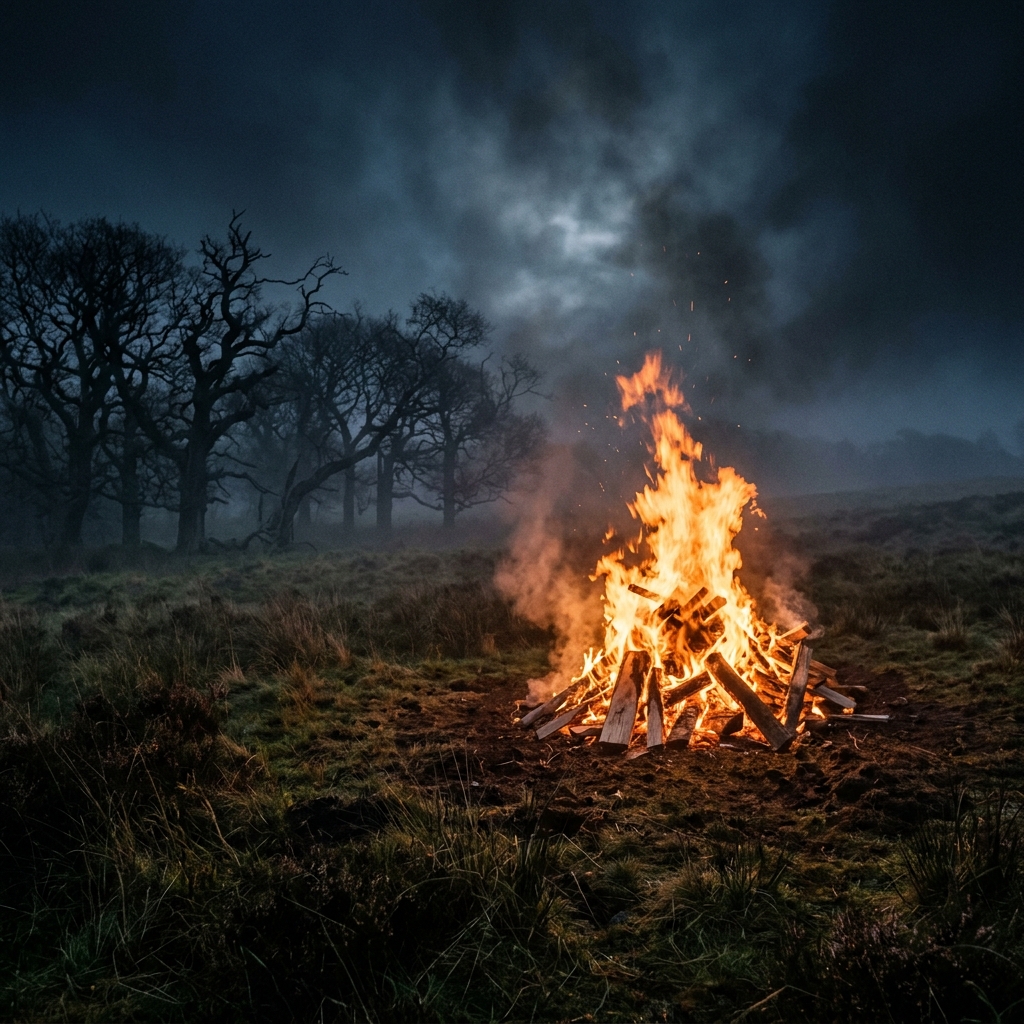
Fires were lit on hilltops. Livestock were brought in from the summer pastures for the final time. Hearth fires in every home were extinguished and relit from a communal bonfire, a ritual of renewal that symbolised the death of the old year and the birth of the new. And on every doorstep, a saucer of milk appeared.
The Cait Sìth’s Role at Samhain
The Cait Sìth’s association with Samhain is not incidental. The creature is, by its nature, a being of the boundary — between the mortal world and the fairy realm, between the domestic and the wild, between the known and the unknowable. Samhain, as the supreme moment of boundary dissolution, was the night when the Cait Sìth’s power was at its zenith.
Highland tradition holds that on Samhain Eve, the Cait Sìth travelled across the landscape with particular purpose. It was not wandering. It was visiting. The creature moved from household to household, from township to township, assessing which homes had made the proper offering and which had not. The journey was understood as systematic — the Cait Sìth did not pass through a community at random but conducted what amounted to an inspection, a supernatural census of compliance and defiance.
The creature’s appearance on Samhain Eve is described in terms consistent with the broader Cait Sìth tradition: a large black cat, roughly the size of a dog, with an arched back, an erect tail, and the distinctive white blaze upon its chest. But accounts specific to Samhain add details not found in other contexts. The Cait Sìth at Samhain is described as moving with particular deliberation, pausing at each threshold, and — in some accounts from the region around Inverness and the inner Moray Firth — making a low, rumbling sound that was neither a purr nor a growl but something between the two.
The soul-stealing capacities of the Cait Sìth, documented extensively in the Foundation’s account of the Fèill Fhadalach funeral vigil, were believed to be amplified at Samhain. A death occurring on or near Samhain was regarded with particular dread, as the combination of the creature’s heightened power and the thinned veil between worlds made the defence of the dead exponentially more difficult.
“At Samhain, the Cait Sìth did not merely pass through. It came to collect what it was owed.” — Field notes, Black Isle oral history project, 1924
The Milk Saucer Offering
The offering itself was deceptively simple. A saucer — typically a shallow earthenware dish, though any flat vessel would serve — was filled with fresh milk and placed on the doorstep of the household before sunset on Samhain Eve. The milk was understood to be not merely a gift but a tribute, an acknowledgement of the Cait Sìth’s authority over the threshold between worlds and a petition for the creature’s favour.
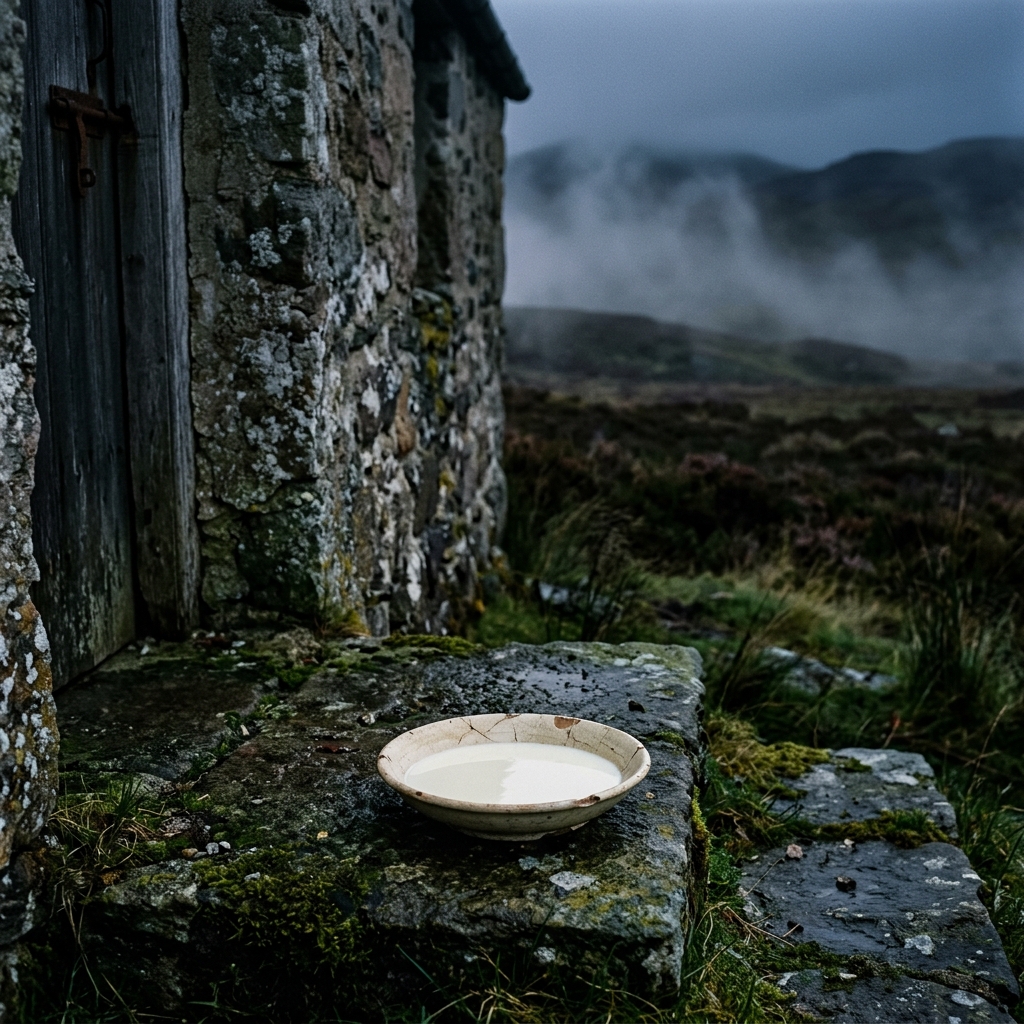
The choice of milk as the offering substance is rooted in the agricultural reality of Highland life. Milk, and the cattle that produced it, represented the primary source of sustenance for Highland communities through the long winter months. Butter, cheese, and milk itself were the staples that sustained families from November to April. The offering of milk to the Cait Sìth was therefore not a token gesture but a sacrifice of genuine material value — a portion of the household’s most critical resource, freely given at the moment when that resource was about to become most scarce.
In some communities, the offering was specifically of the first milk drawn from the cow on Samhain morning. In others, it was the richest milk available — cream, or milk from a cow that had recently calved. The quality of the offering mattered. Accounts from communities around Loch Maree in Wester Ross describe households that offered thin or watered milk receiving diminished blessings, as though the Cait Sìth could discern the generosity or parsimony behind the gesture.
The saucer was placed at the threshold, not inside the house. This detail is consistent across virtually all documented accounts. The doorstep occupied a liminal position — neither fully inside the domestic space nor fully outside in the wild — making it the appropriate location for a transaction between the human and the supernatural. The threshold was where worlds met, and it was at the threshold that the Cait Sìth was to be addressed.
Preparation within the household extended beyond the saucer itself. Doors and windows were secured. Hearth fires were banked low, so that no excess warmth might draw the creature inside. Children were brought in early and kept away from the threshold until morning. In some communities along the western seaboard, a circle of ash from the hearth was drawn around the saucer, a secondary precaution that echoed the protective circles used in other Highland folk practices. The saucer stood at the centre of a carefully maintained boundary — an offering extended but a line held.
Blessings for the Faithful
The reward for a household that provided the Samhain offering was specific and practical: the cows would continue to produce milk through the winter. In the economy of Highland subsistence, this was not a minor blessing. Winter milk production was uncertain and dependent on factors largely beyond human control — the health of the animals, the severity of the weather, the quality of the stored fodder. A household whose cows yielded milk reliably through the dark months had a decisive advantage in the struggle for survival.
The blessing was understood to be communal as well as individual. A township in which every household made the offering could expect collective prosperity — healthy livestock, adequate stores, and a winter that, while hard, would not prove fatal. The Cait Sìth’s favour, once secured, was believed to extend over the entire period from Samhain to Beltane (1 May), covering the most vulnerable months of the Highland year.
“The milk was not charity. It was rent — paid to the creature that held the lease on winter.” — Oral tradition, Grantown-on-Spey, collected 1915
Some traditions, particularly those documented in the central Highlands around Badenoch and Strathspey, attributed additional blessings to the compliant household. Good fortune in general, protection from fairy mischief, and a degree of immunity from the Cait Sìth’s more threatening activities — including its soul-stealing predation — were cited as secondary benefits of the offering. The milk saucer was, in this interpretation, not merely a seasonal transaction but an ongoing compact between the household and the fairy cat, renewed annually at Samhain.
Curses for the Defiant
The consequences of failing to provide the offering were equally specific and considerably more severe. A household that refused the milk saucer — or simply neglected it, whether through forgetfulness, poverty, or scepticism — would find its cattle cursed. The cows would dry up, ceasing to produce milk for the remainder of the winter.
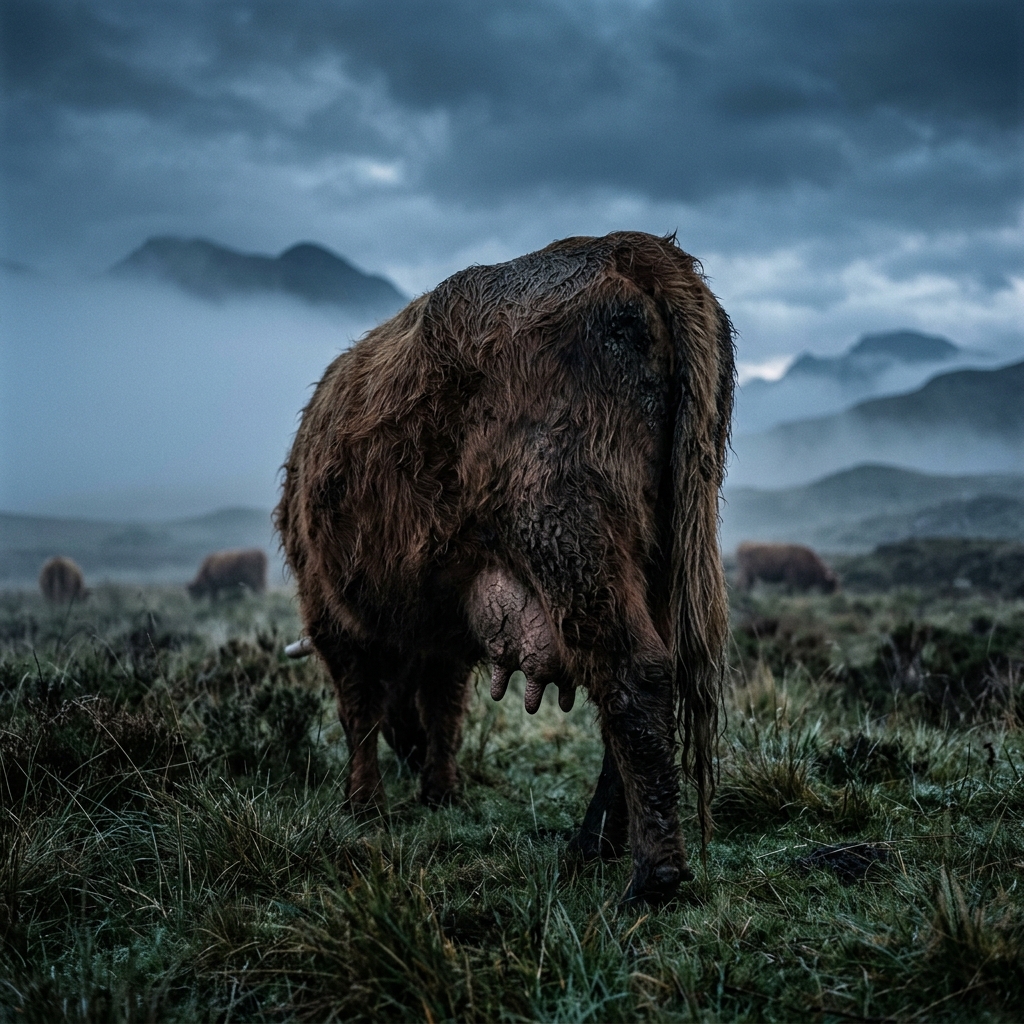
In a society dependent on dairy for survival through the lean months, this was not a metaphorical punishment. It was a potential death sentence. A family without milk through a Highland winter faced malnutrition at best and starvation at worst. The curse of the Cait Sìth was therefore feared not as an abstract misfortune but as a direct and material threat to survival.
The curse was believed to be immediate. Accounts from communities in Sutherland describe cattle drying up within days of Samhain in households that had failed to provide the offering. The rapidity of the punishment served as a cautionary demonstration to the wider community, reinforcing compliance through observable consequence. Whether the observed milk failures were the result of supernatural agency or the natural stresses of winter upon already-marginal livestock is, of course, a question that the tradition itself does not entertain.
In some regions, the curse extended beyond the cattle. Failed crops, illness in the household, and a general pall of misfortune were attributed to the Cait Sìth’s displeasure. Communities around Fort William and Lochaber preserved traditions in which the Cait Sìth was said to mark the door of a non-compliant household with its claws, leaving visible scratches as a sign that the dwelling was known and unfavoured.
The social pressure to comply was considerable. A household that refused the offering was not merely risking its own fortunes but potentially endangering the wider community. If the Cait Sìth’s displeasure could be generalised — and some traditions suggested it could — then a single defiant household might bring misfortune upon its neighbours. This collective dimension ensured that the milk saucer tradition was maintained not only by individual belief but by communal expectation.
Black Cats and the Origins of Halloween
The connection between the Cait Sìth and the broader phenomenon of black cat mythology — from superstition to modern symbolism — is examined in full on the foundation’s dedicated page.
The modern association between black cats and Halloween descends directly from the Samhain milk saucer tradition and the broader relationship between the Cait Sìth and the Celtic festival. The path of transmission is traceable, if not always direct.
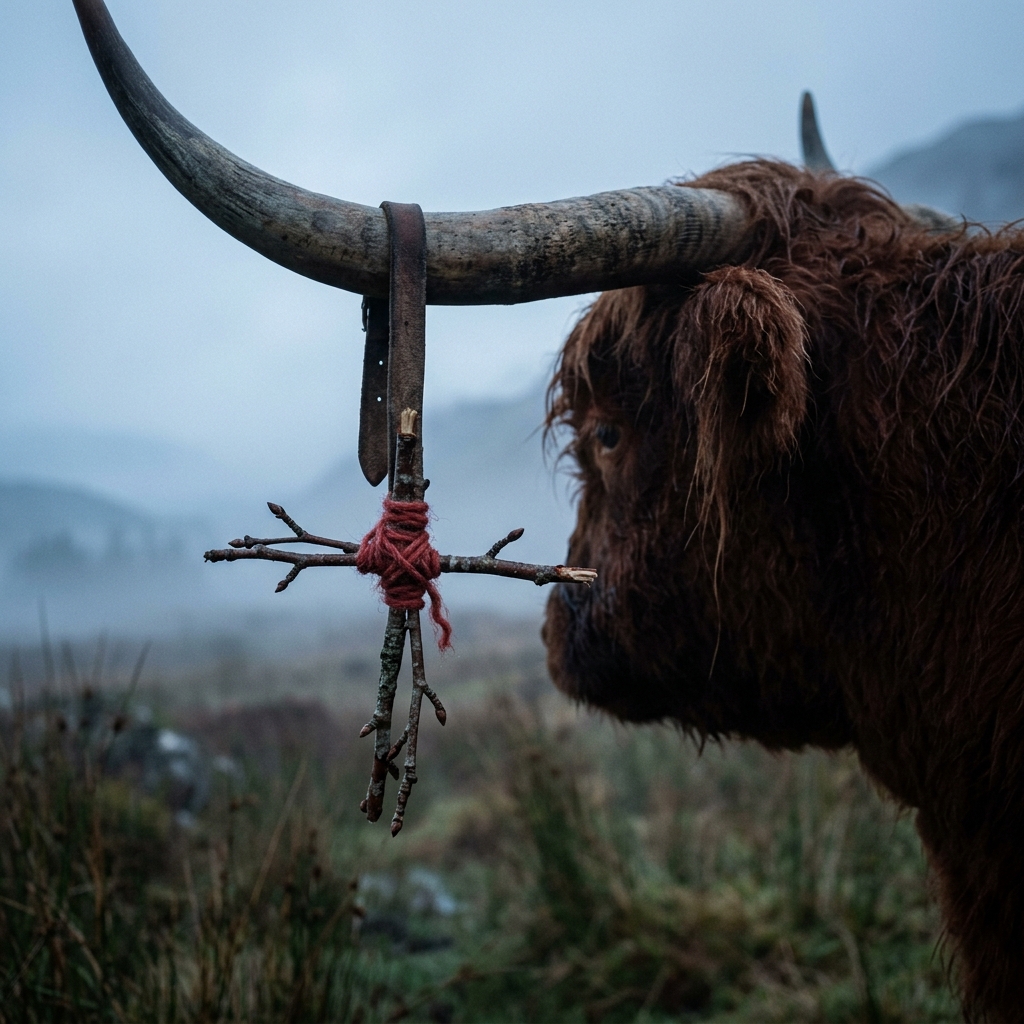
When Gaelic-speaking Scots and Irish emigrated in large numbers during the eighteenth and nineteenth centuries, they carried their Samhain traditions with them. In North America, these traditions merged with other European folk customs and were gradually secularised into the holiday now known as Halloween. The specific rituals — the bonfires, the costumes, the association with the dead — underwent transformation, but certain symbolic elements persisted with remarkable tenacity. The black cat was one of them.
“The black cat on your doorstep at Halloween is the last echo of something that once made an entire culture set out milk and pray for its cattle.” — Foundation comparative study, Samhain traditions in diaspora, 1962
The Cait Sìth, the large black cat that prowled the Highland landscape at Samhain demanding tribute and dispensing blessings or curses, became, through cultural compression and decontextualisation, the generic black cat of Halloween iconography. The specificity was lost — the white chest blaze, the fairy realm origins, the milk saucer transaction — but the core association between a black cat and the night of 31 October survived intact.
The transformation of the Cait Sìth into the Halloween black cat represents a broader pattern in the cultural history of Gaelic traditions. Practices that were once specific, localised, and grounded in a coherent supernatural worldview were abstracted into symbols, decorations, and superstitions, retaining their outward form while losing the belief system that gave them meaning. The black cat on a Halloween card is a descendant of the Cait Sìth, but it has been, in the language of folklorists, folklorised — reduced from a living tradition to an ornamental motif.
The Cait Sìth in Modern Samhain Observance
The Samhain milk saucer tradition in its original form ceased to be widely practised by the mid-twentieth century. The same forces that diminished the Fèill Fhadalach funeral vigil — depopulation, modernisation, the erosion of Gaelic language and culture — eroded the milk saucer custom.
However, the broader Samhain tradition has experienced a revival in recent decades, driven in part by growing interest in Celtic heritage and pre-Christian spiritual practices. Contemporary Samhain observances, particularly within neo-Pagan and Celtic reconstructionist communities, frequently incorporate elements drawn from the historical record, including the milk saucer offering.
These modern observances differ from the historical tradition in important respects. Where the original practice was embedded in a coherent, community-wide belief system and carried real economic consequences, modern Samhain offerings are typically individual acts of spiritual practice, performed within a framework of personal belief rather than communal obligation. The element of genuine fear — the conviction that one’s cattle would dry up if the offering were neglected — is largely absent.
The Foundation observes these developments without judgement. The transmission and adaptation of cultural traditions is a natural process, and the revival of interest in Samhain customs has contributed to broader awareness of Gaelic heritage. What the Foundation does urge is accuracy — that those who wish to honour the tradition understand its origins, its context, and the depth of conviction with which it was observed by the communities that created it.
The relationship between the Cait Sìth and the witch-transformation legend that underlies the nine lives tradition adds a further dimension to the Samhain observances. If the Cait Sìth that visited doorsteps at Samhain was itself a transformed human — a witch in her feline form — then the offering was not merely a transaction with a supernatural animal but an interaction with a being that had once been a neighbour, a kinswoman, a member of the community. This possibility, preserved in oral traditions from Caithness to Argyll, complicates the simple binary of blessing and curse. It suggests that the relationship between the Highlander and the Cait Sìth was always, at some level, a relationship between human beings — separated not by species but by the boundary between natural and supernatural existence.
Connection to Other Samhain Traditions
The milk saucer tradition did not exist in isolation. It formed one strand of a dense tapestry of Samhain customs that together constituted one of the most ritually elaborate festivals in the Gaelic calendar. Understanding the milk saucer’s relationship to these parallel traditions reveals how deeply the Cait Sìth was woven into the broader fabric of Highland belief.
Guising — the practice of disguising oneself and going door to door — was observed throughout the Highlands and Lowlands at Samhain. The custom, which predated its modern descendant of trick-or-treating by centuries, served a dual purpose: it mimicked the movement of supernatural beings through the community, and it offered a form of protective camouflage. A person disguised as a spirit or fairy creature was, according to folk logic, less likely to be targeted by actual spirits moving through the landscape. The Cait Sìth’s own journey from threshold to threshold finds a structural parallel in the guiser’s circuit. Both moved through the community systematically. Both expected something at each door. Both dispensed consequences — the guiser through performance and social sanction, the Cait Sìth through blessing or curse.
The Samhain bonfire, or Tein-Eigin, occupied a central position in the festival’s ritual architecture. The communal fire served as a point of purification and renewal. Livestock were driven between twin fires to cleanse them of disease and ill luck before the winter. Hearth fires in every home were extinguished and relit from the communal flame, a ritual that symbolised the death of the old year and the birth of the new, and that bound each household to its neighbours in a web of shared fire. The protective function of the bonfire was understood to extend to the supernatural: fire held the Otherworld at bay, and the period between the extinguishing of the old hearth fire and the lighting of the new was one of acute vulnerability — a window during which the Cait Sìth and other fairy beings had uncontested access to the darkened home.
“The fire was put out. The door was opened. And between the dying flame and the new one, the world held its breath.” — Oral tradition, Glen Affric, collected 1912
Divination practices at Samhain were widespread and took numerous forms. Young women peeled apples and cast the skins over their shoulders to discern the initials of future husbands. Nuts were placed in pairs upon the hearth to predict the course of romantic relationships. Mirrors were consulted in candlelight. These practices exploited the same cosmological principle that governed the milk saucer tradition: at Samhain, the boundary between present and future, known and unknown, was permeable. The Cait Sìth’s movement through the community was itself a form of divination in reverse — the creature did not reveal the future but determined it, dispensing fates that would unfold over the coming winter based on what it found at each threshold.
The food offerings at Samhain extended beyond the milk saucer. In many communities, a portion of the evening meal was set aside for the dead, placed at a window or on the hearth. Bread, oatcakes, and ale were common offerings to the returning spirits of ancestors. The milk saucer for the Cait Sìth sat alongside these offerings but was distinct from them. The food for the dead was an act of remembrance and hospitality. The milk for the Cait Sìth was an act of appeasement and negotiation. The dead were welcomed; the Cait Sìth was managed.
Together, these interlocking traditions reveal Samhain as a night of comprehensive engagement with the supernatural — a carefully orchestrated series of rituals designed to navigate the most dangerous night of the year. The milk saucer tradition, far from being an isolated superstition, was one element of a coherent system of belief and practice that addressed every dimension of the community’s relationship with the Otherworld.
The Samhain Offering and the Broader Cait Sìth Tradition
The Samhain milk saucer tradition cannot be understood in isolation from the broader cycle of Cait Sìth lore. It forms one element of a comprehensive relationship between Highland communities and the fairy cat — a relationship that encompassed the funeral vigils of the Fèill Fhadalach, the daily precautions observed by those who lived in areas of known Cait Sìth activity, and the broader system of belief that situated the creature within the cosmology of the Aos Sì.
Samhain was the annual moment of reckoning — the point at which the ongoing relationship between community and creature was formally acknowledged and renewed. The funeral vigil responded to crisis; the Samhain offering maintained the peace. Together, they constituted a complete system of engagement with a being that was understood to be permanent, powerful, and unavoidable.
The Foundation’s archives preserve first- and second-hand accounts of the milk saucer tradition as it was practised in living memory. In the township of Achnasheen in Wester Ross, an informant born in 1858 recalled the offering as a matter of unremarkable routine. The milk was set out. It was gone by morning. No discussion attended the act. It was done because it had always been done, and because the consequences of not doing it were understood without the need for articulation.
In Strathspey, a more elaborate form was documented. The milk was placed in a specific dish — a shallow wooden bowl, blackened with age, that was kept for no other purpose and brought out only at Samhain. The dish had been in the family for generations. Its use for any purpose other than the Cait Sìth offering would have been considered an act of desecration.
On the Isle of Lewis, the offering was accompanied by a spoken formula — a brief Gaelic phrase, translatable roughly as “for the great cat, with respect” — that was recited as the saucer was placed. The formula varied from family to family and was passed down through the maternal line.
“You did not bargain with the Cait Sìth once and consider the matter settled. It returned every year, at the same time, to the same door. The arrangement was perpetual.” — Oral history, Beauly district, recorded 1926
These accounts converge on a common portrait: a tradition observed with quiet gravity, without fanfare or theatrics, as a practical measure against a practical threat. The people who set out the milk were not performing a ritual in the theatrical sense. They were taking a precaution, as one might lock a door or bank a fire.
Frequently Asked Questions
What is the Samhain cat tradition?
During Samhain, Highland households placed saucers of milk outside their doors to appease the Cait Sìth. The creature was believed to travel from household to household on Samhain Eve, assessing which homes had made the proper offering. Those who complied received blessings for their cattle through the winter; those who refused were cursed with dried-up milk and general misfortune.
Why did people leave milk out for the Cat Sìth?
The milk offering was a gesture of respect and appeasement to the Cait Sìth, believed to roam freely during Samhain when the boundary between the mortal world and the fairy realm thinned. Milk was chosen because it represented the primary source of sustenance for Highland communities through the winter months — making the offering a sacrifice of genuine material value.
What happens if you don’t leave milk for the Cat Sìth?
According to tradition, households that refused the offering would find their cows’ milk dried up for the entire winter — a devastating punishment in a pastoral Highland community dependent on dairy for survival through the lean months. In some regions, the curse extended to failed crops, illness, and a general pall of misfortune.
How is the Cat Sìth connected to Samhain?
Samhain marked the thinning of the veil between worlds, allowing supernatural beings like the Cait Sìth to move freely among the living. The creature’s power was believed to be at its zenith during Samhain, and it visited households systematically to demand offerings and dispense blessings or curses based on compliance.
Why are black cats associated with Halloween?
The black cat’s association with Halloween traces directly to the Cait Sìth — a large spectral black cat from Scottish folklore that roamed freely during Samhain, the Celtic festival that became Halloween. When Gaelic-speaking Scots and Irish emigrated during the eighteenth and nineteenth centuries, they carried their Samhain traditions with them, and the black cat imagery survived even as the specific ritual context was lost.
Further Reading
- The Cait Sìth: Scotland’s Phantom Fairy Cat of the Highlands — The Foundation’s comprehensive account of the creature at the centre of the Samhain milk saucer tradition, including its origins in the Aos Sì and its role in Highland cosmology.
- The Fèill Fhadalach: The Ancient Funeral Vigil That Guarded the Dead — The companion ritual tradition to the Samhain offering, documenting the community’s defensive response to the Cait Sìth’s soul-stealing predation at times of death.
- Nine Lives: The Witch Transformation and the Origin of Cats’ Nine Lives — The tradition that the Cait Sìth may itself be a transformed witch, adding a human dimension to the creature that visited Highland doorsteps each Samhain.