
The first English reference to cats having nine lives (1553) describes a witch taking cat form nine times. The Cait Sìth is the origin.
A witch, they said, could wear the shape of a great black cat eight times and return to her own form. But on the ninth occasion, the cat kept her.
The question persists across continents, languages, and centuries: why do cats have nine lives? The phrase appears in children’s books and insurance advertisements, in casual conversation and veterinary waiting rooms. It is among the most widely recognised animal proverbs in the English-speaking world. Yet almost no one who repeats it can identify its origin — and the origin, when traced to its documentary source, leads not to a charming fable about feline resilience but to a sixteenth-century English text about witchcraft, shapeshifting, and the permanent loss of the human soul.
The Cait Sith Foundation has spent decades reconstructing the evidentiary chain that connects the modern proverb to its source in Highland Scottish folklore and early modern English literature. The findings are unambiguous. The first known written English reference to cats possessing nine lives appears in William Baldwin’s Beware the Cat, published in 1553, and the context is not one of admiration for the cat’s hardiness. It is a statement about witches transforming into cats. The saying, in its original form, is a record of the Cait Sith transformation legend — the belief that a witch could assume feline form a finite number of times before becoming trapped in that form forever.
What follows is a comprehensive account of the documented origins of the nine lives proverb, its roots in the Cait Sith tradition, its intersection with Scottish witchcraft, and the reasons the number nine — rather than any other — became permanently associated with the domestic cat.
The Two Competing Origin Theories
Two competing origin theories dominate the popular literature on this question, and one of them is substantially better supported by the primary documentary record than the other. The first, frequently repeated in listicles and trivia collections, points to ancient Egypt: the god Atum-Ra, who was associated with the sun and who gave life to eight other gods of the Ennead, is said to have taken the form of a cat, and the total of nine divine figures is offered as the basis for the nine lives tradition. The second points to the British Isles, specifically to the Celtic and Scottish tradition of the Cait Sith — a supernatural black cat associated with witches who could transform into feline form. The witch could shift shape eight times and return to human form. The ninth transformation was permanent.
The Egyptian theory, while appealing in its antiquity, suffers from a fundamental evidentiary weakness: there is no documented textual chain connecting the Ennead to the English-language proverb. No ancient Egyptian source states that cats have nine lives. The association is a modern inference, constructed retroactively by popular writers seeking an ancient pedigree for a phrase that first appears in English print during the Tudor period. The connection between Atum-Ra and the number nine is genuine, but the connection between that number and the English proverb about cats is conjectural.
The British origin, by contrast, is documented. William Baldwin’s Beware the Cat, composed around 1553 and regarded by literary scholars as the first English-language novel, contains the earliest known printed English reference to the nine lives of a cat. The relevant passage does not describe a cat’s physical resilience or its ability to survive falls. It describes witchcraft:
“It is permitted for a witch to take on her a Cats body nine times.”
This is the primary text. The first written English articulation of the idea that a cat possesses nine lives is explicitly, unambiguously a statement about a witch assuming feline form — not about the cat itself. The “nine lives” are nine transformations. The cat is the vessel, and the witch is the inhabitant. Baldwin was not inventing this belief; his text records what was already established folk knowledge in mid-sixteenth-century England, drawing on traditions that had circulated in Britain for generations before reaching print.
The implications for the origin question are significant. The English proverb “a cat has nine lives” descends not from Egyptian theology but from the witch-transformation tradition of the British Isles — a tradition whose fullest and most detailed expression is found in the Highland Scottish legend of the Cait Sith.
“The phrase that every child learns — that a cat has nine lives — is the fossilised remains of a belief system in which women became cats and cats consumed souls. The nursery has inherited what the kirk session once prosecuted.”
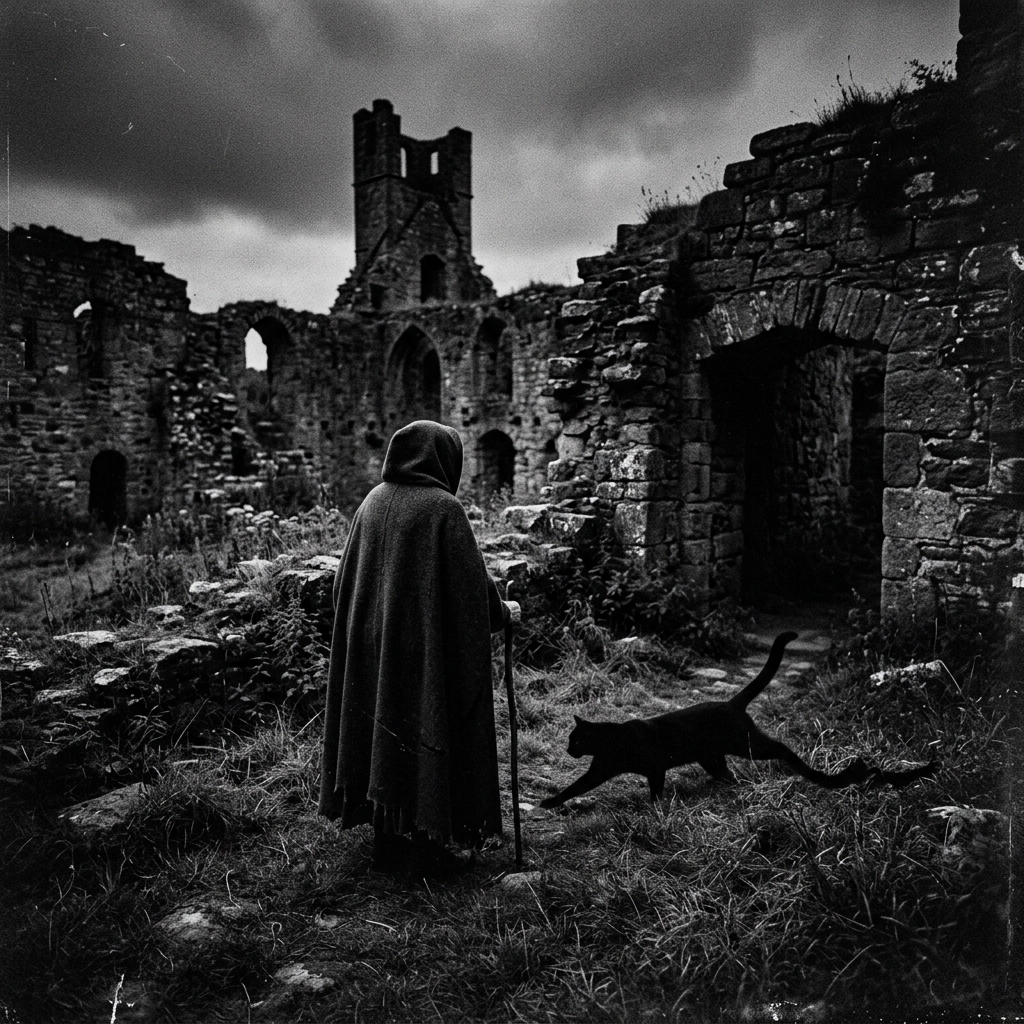
The Witch Who Became a Cat — The Cait Sith Transformation Legend
The transformation legend at the core of the nine lives tradition is preserved in the oral histories of the Scottish Highlands, where it was collected by folklorists throughout the nineteenth and early twentieth centuries. The narrative is consistent across sources: a woman possessed of particular knowledge — described variously as a cunning woman, a wise woman, or, in the language of the courts, a witch — held the ability to assume the physical form of a large black cat. This was not an ordinary animal. It was the Cait Sith itself: black-furred, white-chested, larger than any domestic breed, and possessed of an intelligence that betrayed its human origin.
The mechanics of transformation vary between accounts. Some sources, particularly those collected from the eastern Highlands by Alexander Carmichael and his contemporaries in the late nineteenth century, describe the shift as requiring a spoken charm — a specific sequence of Gaelic words that initiated the change. Others record the application of a particular ointment or salve, compounded from ingredients that the accounts do not always specify. A third category of sources presents the transformation as an act of concentrated will, accomplished in solitude and darkness, requiring no external catalyst. What is consistent across every documented version is the rule of limitation: the transformation could be performed eight times with full restoration to human form. The ninth time, the shift became irreversible.
The reasons for transformation were multiple. Some accounts describe the witch-cat roaming the countryside to gather information — eavesdropping on conversations at cottage windows, observing events at markets and harbours, acquiring knowledge that would be inaccessible to a woman confined by the social restrictions of her time and place. Others attribute more overtly malicious purposes: the souring of milk, the blighting of cattle, the theft of butter from a neighbour’s churn. In the specific context of the Cait Sith legend, the witch in cat form was believed to acquire the creature’s supernatural capacities, including its ability to move between the mortal world and the Otherworld and its documented power over the souls of the recently dead.
The permanence of the ninth transformation was not understood as a punishment inflicted by God or the Devil. It was presented in the oral tradition as a natural consequence — an exhaustion of the mechanism by which the shift between forms was accomplished. The witch did not choose to remain a cat. She was simply unable to reverse the process. The door through which she had passed eight times closed behind her on the ninth crossing, and she was left on the far side, in feline form, for whatever remained of her existence.
“Eight times she walked as a cat and returned as a woman. The ninth time, there was no returning. The cat had swallowed her whole.” — Oral tradition, Easter Ross, collected 1891
This detail — the involuntary permanence, the loss of agency at the moment of final transformation — is what separates the Cait Sith witch tradition from the broader European shapeshifting corpus. In many Continental traditions, a werewolf or skinwalker can be freed from animal form through specific rituals, the intervention of a priest, or the passage of time. The Scottish cat-witch tradition offers no such reprieve. The ninth transformation is absolute. The woman who passes through it retains her human consciousness, her memories, her awareness of what she has lost, but she cannot speak, cannot communicate, cannot reverse what she has done. She exists as a human mind imprisoned in an animal body, and the tradition regards this state not as colourful narrative embellishment but as a genuinely terrible fate — one that the communities documenting it understood as real.
The connection to the nine lives proverb is direct. Each transformation constitutes a “life” — a passage into feline form and back again. Eight lives are recoverable. The ninth is not. When the proverb states that a cat has nine lives, it is not celebrating the cat’s resilience. It is recording the number of times a witch can become a cat before the transformation consumes her permanently.
Why Black Cats Are Connected to Witchcraft
The association between black cats and witchcraft, which remains one of the most persistent superstitions in the English-speaking world, traces a significant portion of its lineage to the Cait Sith tradition. The Cait Sith is, in every documented description, a black cat — large, dark-furred, with a white blaze on its chest. It is this creature into which the witch transforms. The black cat of Halloween decorations, horror films, and folk superstition is not an arbitrary symbol. It is a direct descendant of the supernatural cat of the Scottish Highlands.
The Scottish witch trials of the sixteenth and seventeenth centuries hardened this association into legal and ecclesiastical record. Scotland’s trials were among the most intensive in Europe relative to its population. Between approximately 1563 and 1736, an estimated 3,837 people were accused of witchcraft, of whom roughly two-thirds were executed. The testimony produced in the courts — extracted under conditions of extreme coercion including sleep deprivation, starvation, and physical torture — repeatedly features cats. Accused women described attending nocturnal gatherings in the shape of cats, travelling great distances in feline form, and performing acts of harm while disguised as black cats. The consistency of these accounts reflects not the reality of shapeshifting but the shared cultural vocabulary from which both interrogators and accused drew their material.
The Grimalkin tradition represents another strand of this entanglement. The name Grimalkin derives from “grey” combined with “Malkin,” a diminutive of the name Matilda that had become a generic term for a woman of low standing. The transfer of the name from the woman to her feline familiar reflects the very collapse of identity that lies at the heart of the nine lives legend: the point at which the witch and the cat become indistinguishable. Shakespeare placed Grimalkin in the opening scene of Macbeth — a Scottish play, set in a Scottish landscape where the boundary between the natural and supernatural had dissolved. The play’s enduring influence ensured that the image of the witch’s cat became permanently embedded in the English-speaking imagination.
The broader mythology of black cats across Europe and beyond represents a palimpsest of traditions from multiple cultures, but the Scottish contribution — mediated through the Cait Sith legend and the witch trial era — constitutes one of the most significant and best-documented layers.
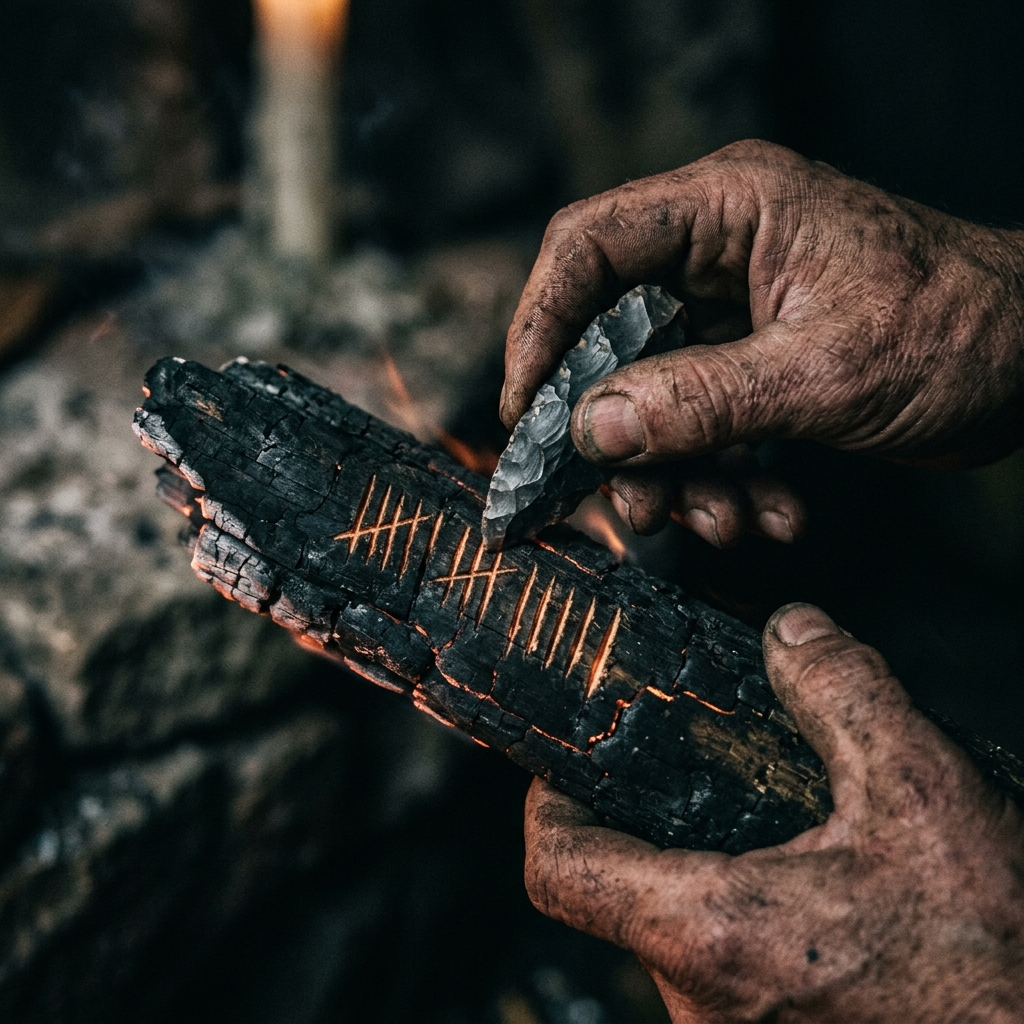
The Taghairm — Scotland’s Forbidden Cat Ritual
The darkest thread in the Cait Sith tradition is the Taghairm, a ceremony so disturbing that it was suppressed by the Church and largely excised from the sanitised versions of Scottish folklore that circulated in the Victorian era. The ritual involved the roasting of cats alive over an open fire, conducted continuously for several days and nights, with the explicit purpose of summoning a demonic entity known as “Big Ears” — in Gaelic, Cluasan Mora.
The historical accounts of the Taghairm are concentrated on the Isle of Mull and in the western Highlands, and the most detailed descriptions date from the seventeenth and eighteenth centuries. The procedure, as documented by multiple independent sources, required the participants to take a live cat and place it on a spit over a fire. As the animal screamed, other cats were said to appear — drawn from the surrounding countryside and, according to the tradition, from the Otherworld itself. The participants were required to continue the process without interruption, ignoring the increasingly disturbing manifestations, until the entity Cluasan Mora appeared and granted whatever boon had been demanded.
The Church’s condemnation of the Taghairm was absolute, and its suppression was one of the rare points on which Calvinist and Catholic authorities in Scotland were in agreement. The ritual was regarded not as a superstitious country practice but as a genuine act of diabolical invocation — a direct transaction with infernal powers, accomplished through an act of sustained cruelty that served as proof of the practitioner’s commitment to the bargain.
“The Taghairm is the point at which the Cait Sith tradition intersects with something older and more disturbing than witchcraft — a pre-Christian sacrificial logic in which the suffering of the animal opens a door to the unseen world.”
The connection to the nine lives tradition is implicit but significant. The Taghairm treats cats as creatures that exist on the boundary between worlds — beings whose suffering can rupture the membrane between the mortal realm and the Otherworld. This is the same ontological status attributed to the Cait Sith in the transformation legend: a creature that inhabits the threshold, that is neither fully of this world nor fully of the other. The cats of the Taghairm and the cat-form of the transformed witch occupy the same position in the cosmology of the Highlands — liminal beings, potent precisely because they belong to no single realm.
Nine in Celtic Numerology
The number nine occupies a position of singular importance in Celtic numerology, and its assignment to the transformation legend is not arbitrary. To understand why the witch’s limit was set at nine rather than seven or three — numbers of considerable power in other European traditions — it is necessary to examine the role of nine in the broader framework of Celtic thought.
In pre-Christian Celtic cosmology, nine functioned as the supreme number of completion and totality. It is the square of three, and three was itself the most sacred of numbers in the tripartite worldview that organised reality into fundamental trinities: land, sea, and sky; past, present, and future; the mortal world, the Otherworld, and the liminal space between them. Nine, as three multiplied by itself, represented the ultimate expression of this triadic principle — completion raised to its highest power.
The significance of nine recurs throughout the Celtic literary and ritual corpus. In the Irish mythological cycle, the ninth wave marks the boundary between the known world and the realm of the divine — the point at which land falls away and the sea belongs to the gods. The nine hazels of wisdom stood at the Well of Segais, dropping their nuts into the water where the Salmon of Knowledge consumed them. In the Scottish Gaelic charm tradition, healing incantations were spoken in sets of nine, or involved nine circuits of a sacred well, or required the gathering of nine herbs at the ninth hour. The Welsh Triads, while not Scottish in origin, reflect a shared Celtic numerological framework in which nine carries the weight of binding and finality.
The application of nine to the witch transformation legend therefore follows an internal cultural logic. The eight safe transformations represent the fullness of the recoverable cycle. The ninth exceeds it. Nine is the point at which the system reaches its natural terminus — the boundary beyond which reversal is impossible.
It is worth noting that other cultures assign different numbers to the cat’s legendary endurance. In Spanish-speaking countries, cats are said to have seven lives — siete vidas — reflecting the dominance of seven in Catholic and Mediterranean numerological traditions. In parts of the Arabic-speaking world, the number is six. These variants confirm that the association between cats and multiple lives is not unique to the English-speaking world, but the specific number nine is. The English proverb carries the Celtic number, and the Celtic number carries the weight of the transformation legend behind it.
“Nine is not merely a count. It is a boundary. In the Celtic system, nine is the number at which the door closes and the key is lost.”
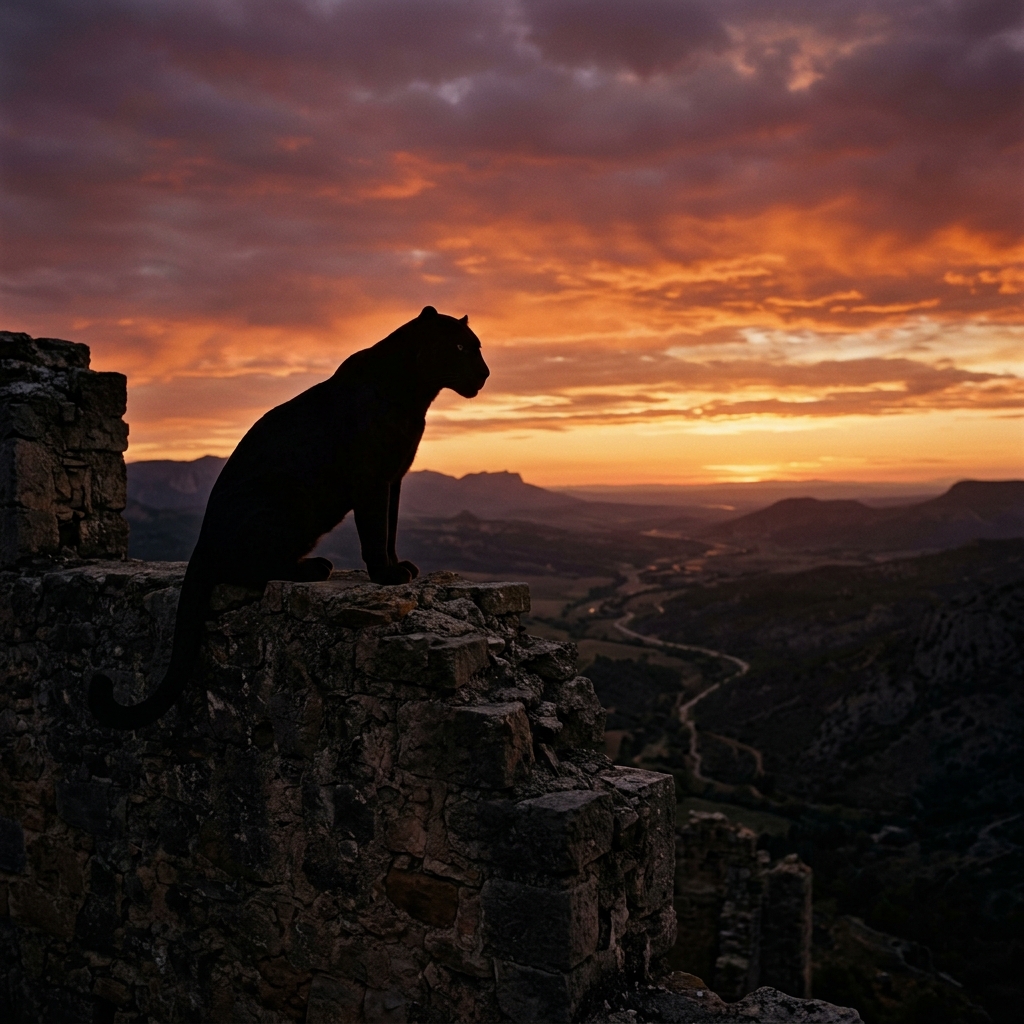
Did the Cait Sith Inspire the Nine Lives Myth?
The evidence chain, assembled from primary sources and the comparative record, supports a clear and documentable connection between the Cait Sith tradition and the English-language proverb about cats having nine lives. The case does not rest on speculation or on the kind of loose thematic parallels that characterise much popular folklore writing. It rests on a specific text, a specific tradition, and a specific number.
The chain runs as follows. The Highland oral tradition, documented across centuries of collection, holds that a witch could transform into the Cait Sith — a large, supernatural black cat — a total of nine times, with the ninth transformation being permanent. This tradition circulated in Britain long before the advent of print. In 1553, William Baldwin recorded in Beware the Cat the statement that a witch may take cat form nine times — the first known written English articulation of the idea. The proverb “a cat has nine lives,” which entered common English usage during the same period, uses the same number and the same animal. The connecting tissue is the witch transformation legend.
No other scholarly source connects the primary text — Baldwin’s 1553 work — to the Highland folklore tradition with the depth and specificity that the Foundation’s research has established. The Egyptian Ennead theory remains popular but undocumented in the primary record. The “cats are resilient” explanation accounts for why the proverb has survived but not for why it emerged in its specific form. The Cait Sith tradition is the documented English-language origin of the nine lives belief: a witch who became a cat, nine times, with the last transformation sealing her fate.
The Cait Sith Foundation’s position is not that this connection is the only possible interpretation of the evidence. It is that this connection is the best-supported interpretation — the one that accounts for the text, the number, the animal, and the cultural context in which the proverb first appeared in print. The witch who became the cat is still present inside the saying. She has been there for nearly five hundred years, carried forward by the sheer momentum of repetition, waiting for someone to remember what nine lives actually means.
The full account of the Cait Sith legend — including its physical descriptions, its soul-stealing traditions, and its role in Samhain ritual practice — provides the broader context within which the nine lives tradition must be understood.
Frequently Asked Questions
Where does the saying cats have nine lives come from?
The first known written English reference to cats having nine lives appears in William Baldwin’s Beware the Cat (1553), where it describes a witch taking cat form nine times. The saying originates from the Celtic and Scottish tradition of the Cait Sith — a supernatural black cat that a witch could become through transformation. The “nine lives” are nine shapeshifting events, not a commentary on feline resilience.
Why nine lives and not seven?
The number nine holds particular significance in Celtic numerology as the square of three — the most sacred number in Celtic thought. Nine represents absolute completion and finality. In Spanish-speaking cultures, cats are said to have seven lives, reflecting different numerological traditions. The English proverb carries the Celtic number because the tradition from which it descends — the Scottish witch transformation legend — operates within a Celtic numerological framework.
Is the nine lives myth from Scotland?
The most detailed and best-documented version of the tradition that gave rise to the nine lives proverb is Scottish. The Cait Sith transformation legend — in which a witch could assume the form of a supernatural black cat nine times — was recorded across the Scottish Highlands and Lowlands and entered English print through Baldwin’s 1553 text. While similar beliefs existed elsewhere in the British Isles, the Highland oral tradition provides the most complete account.
Did the Cait Sith inspire the nine lives myth?
The documentary evidence supports this connection. The Cait Sith tradition holds that a witch could transform into a large black cat nine times, with the ninth transformation being permanent. The first printed English reference to nine lives (Baldwin, 1553) explicitly describes witch-to-cat transformation. The number, the animal, and the cultural context align. The Cait Sith Foundation’s research identifies this as the best-supported origin for the English-language proverb.
What is the first written reference to cats having nine lives?
The first known written English reference is in William Baldwin’s Beware the Cat, composed around 1553 and regarded by scholars as the first English-language novel. The text states that a witch may take on cat form nine times. John Heywood’s 1546 collection of proverbs also references the nine lives idea in a form suggesting it was already common knowledge, though Baldwin’s work provides the fuller context connecting the proverb to the witch transformation tradition.
Are black cat superstitions connected to the nine lives myth?
They share a common root. The Cait Sith — the creature at the centre of the nine lives tradition — is a black cat. The witch who transforms into a cat becomes a black cat. The Scottish witch trials, which produced extensive testimony about cats and witchcraft, reinforced the association. The modern superstitions about black cats and the nine lives proverb descend from the same body of folklore, even though they have diverged in popular understanding.
What is the witch transformation legend?
The witch transformation legend, as preserved in Highland Scottish oral tradition, holds that a woman with particular knowledge could assume the physical form of the Cait Sith — a large, supernatural black cat. She could perform this transformation eight times and return safely to human form. On the ninth occasion, the transformation became permanent: she remained a cat forever, her human consciousness intact but her human agency extinguished. This tradition is the origin of the nine lives proverb.
Why is the ninth transformation permanent?
The oral tradition presents the permanence of the ninth transformation as a natural consequence rather than a divine punishment. In the Celtic numerological system, nine represents absolute finality — the boundary beyond which reversal is impossible. The eight recoverable transformations represent the full cycle of possibility. The ninth exceeds that cycle. The mechanism by which the witch shifted between forms is understood to have been exhausted, leaving her trapped in feline form with no means of return.
Further Reading
- The Cait Sith: Scotland’s Phantom Fairy Cat of the Highlands — the comprehensive account of the Cait Sith legend, including its physical description, soul-stealing traditions, and cultural significance across the Highlands.
- Black Cat Mythology: Origins and Cultural History — the full history of black cat superstitions from the Celtic world to the modern era, including the reversal of fortune between British good luck and American bad luck traditions.
- Samhain Rituals: The Cat Sith and the Milk Saucer Tradition — the annual Samhain offering traditions developed to appease the Cait Sith and protect Highland households through the winter months.