
The Kellas cat, a genuine hybrid of Scottish wildcat and domestic cat, may have inspired the Cait Sìth legend. Discover the science behind the myth.
In 1984, a gamekeeper near the village of Kellas in Moray trapped something that should not have existed — a cat too large, too dark, and too wild for any domestic lineage.
In the winter of 1984, a gamekeeper near the village of Kellas in Moray, northeast Scotland, caught a cat unlike any he had previously encountered. It was large — far larger than the domestic cats that frequented the farms of the district — with a sleek, uniformly black coat and a powerful, muscular frame. The animal was not a domestic cat gone feral. Nor was it, in any conventional sense, a Scottish wildcat, though it bore certain characteristics of that species. It was something between, something that had no name in the scientific literature and yet had been spoken of in Highland oral tradition for centuries.
The specimen was sent to the National Museums of Scotland, where it was examined and eventually classified as a hybrid between the European wildcat (Felis silvestris silvestris) and the domestic cat (Felis catus). It was given the common name Kellas cat, after the village near which it was captured. What the scientists had documented was, in zoological terms, a previously unrecognised hybrid population. What the communities of the Scottish Highlands had known for generations was something rather different: a large, dark, uncanny cat that moved through the glens with the authority of a creature that belonged to no ordinary category.
The Kellas cat occupies a rare position in the space between folklore and natural history. It is at once a real animal, genetically verified and taxonomically described, and a figure that maps with remarkable precision onto the descriptions of the Cait Sìth (pronounced “caught shee”) — the spectral fairy cat of Highland tradition. The question of whether Kellas cats inspired the Cait Sìth legend, or whether the legend simply found its most plausible candidate in a flesh-and-blood animal, remains one of the most compelling intersections of Scottish folklore and conservation science.
Discovery and Scientific Documentation
The 1984 Kellas specimen was not, in retrospect, the first of its kind to be encountered. Accounts from gamekeepers, farmers, and hill walkers throughout the northeast Highlands describe large black cats observed in moorland and forested areas across Moray, Aberdeenshire, and into the Cairngorms throughout the twentieth century. These accounts were, for the most part, dismissed as misidentifications of domestic cats, or else filed alongside the broader phenomenon of “phantom cat” sightings — reports of anomalous large cats in the British countryside.
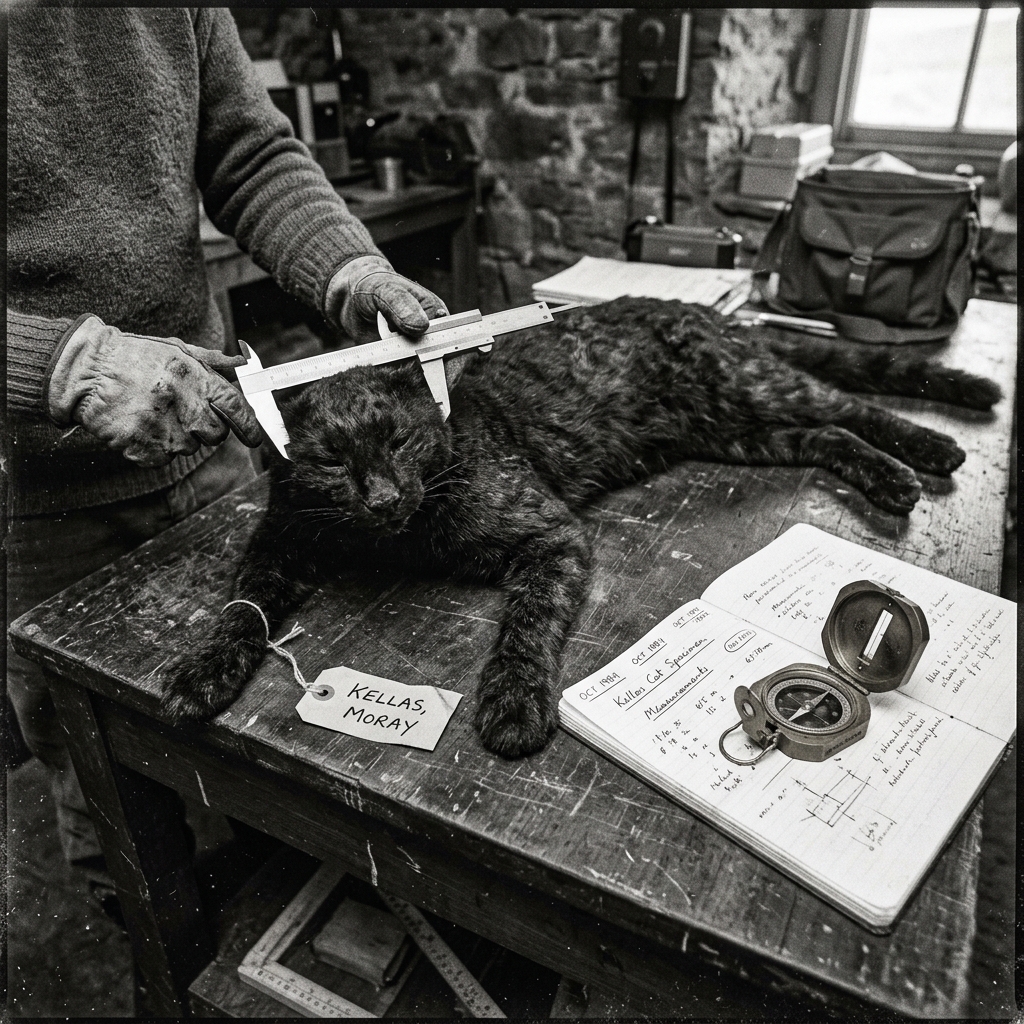
The 1984 capture changed the terms of the discussion. Here was a physical specimen, available for measurement, dissection, and genetic analysis. The animal measured approximately 65 centimetres in body length, with a proportionally long tail, and weighed in the region of 5 to 7 kilograms — substantially heavier than most domestic cats and comparable in mass to a small female Scottish wildcat. Its coat was uniformly melanistic (black), a trait uncommon in pure Scottish wildcats but well-established in domestic cat populations.
Subsequent analysis by Dr. Karl Shuker, the zoologist and cryptozoological researcher who brought the Kellas cat to wider scientific attention in the early 1990s, confirmed the hybrid nature of the animal. Genetic studies conducted through the late 1990s and into the 2000s established that the Kellas cat population represented a stable, reproducing hybrid between wildcat and domestic lineages. The melanistic coat was identified as a heritable trait likely derived from domestic cat genetics, expressed within a body plan and behavioural profile more closely aligned with the wild ancestor.
“What the gamekeeper found near Kellas was not a monster, and it was not a myth. It was a cat that had been hiding in plain sight for centuries — visible to everyone who cared to look, invisible to everyone who required a specimen before they would believe.” — Adapted from the Cait Sìth Foundation field research notes, 1998
Additional specimens were recovered in the years following the initial discovery. A particularly well-preserved example, caught alive near Forres in 1985, provided further material for study. By the mid-1990s, the scientific community had accepted the Kellas cat as a genuine hybrid population, though debate continued regarding its precise taxonomic status and the frequency of hybridisation events between wild and domestic cats in the Scottish Highlands.
Physical Characteristics
The physical description of the Kellas cat aligns, in several key respects, with the traditional appearance of the Cait Sìth as recorded in Highland oral sources collected by the Foundation over the past century.
The Kellas cat is large. Not the size of a dog, as certain Cait Sìth accounts maintain, but considerably larger than a standard domestic cat and at the upper end of the size range for Scottish wildcats. Body length, from nose to base of tail, ranges from 60 to 73 centimetres, with the tail adding a further 30 centimetres or more. Weight in adults falls between 4.5 and 7.5 kilograms, with occasional specimens exceeding this range.
The coat is the defining feature. Kellas cats are melanistic — their fur is a deep, uniform black, sometimes with a faint brown or dark chocolate undertone visible in direct sunlight. This melanistic colouration occurs only rarely in pure Scottish wildcats but is well-represented in the Kellas hybrid population, suggesting that the gene responsible has been successfully transmitted through multiple generations of hybridisation.
The body is muscular and compact, with proportionally longer legs than those of a domestic cat, giving the animal a distinctly rangy appearance. The skull is broad, the jaw powerful, and the ears slightly smaller and more rounded than those of a typical domestic cat — features inherited from the wildcat parentage. The eyes are large and, by multiple accounts, possess a yellow-green iridescence that is particularly striking in low light conditions.
Several Kellas cat specimens have been noted to possess a small white patch or tuft of white hairs on the chest. This detail, which might escape notice in a purely zoological context, takes on considerable significance when set alongside the Highland tradition of the Cait Sìth’s distinctive white chest blaze. Whether the white marking in Kellas cats is common enough to have contributed to the folklore tradition, or whether it represents an incidental overlap, remains an open question. The foundation’s dedicated page on the mythology of the black cat examines how this physical marker connects the Highland legend to centuries of black cat superstition across Europe.
“Black as the peat, built like a thing that had never known a hearth, and with eyes that caught the torchlight in a manner no farmyard cat’s eyes ever did.” — Oral description of a large cat sighted near Grantown-on-Spey, collected 1931
Habitat and Range in the Scottish Highlands
Kellas cats have been documented primarily in the northeast of Scotland, in a belt of territory extending from the Moray coast inland through the Spey valley and into the margins of the Cairngorms National Park. Sightings and specimen recoveries cluster in areas of mixed habitat: the transition zones between lowland farmland and upland moor, where woodland corridors, heather-covered hillsides, and river systems intersect.
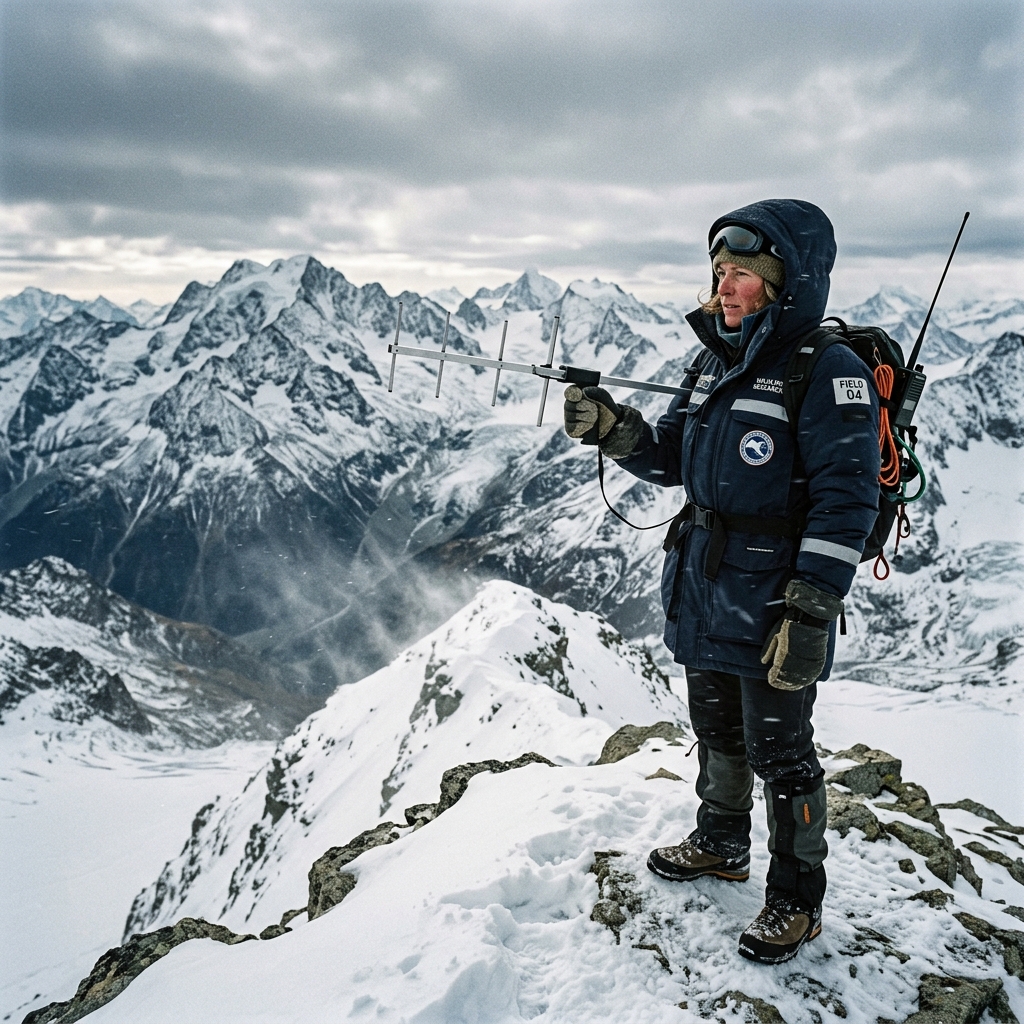
This habitat preference is consistent with a hybrid animal that draws on the behavioural repertoire of both its parent species. Scottish wildcats favour remote woodland and montane habitats, avoiding human habitation. Domestic cats, by contrast, are creatures of the farmstead and settlement. The Kellas cat appears to occupy the transitional ground between these extremes, using the woodland edge and the margins of agricultural land as its primary hunting territory.
The range coincides with the historic heartland of Cait Sìth reports. The counties of Moray, Banffshire, Aberdeenshire, and Inverness-shire — all regions with deep Gaelic-speaking traditions that persisted into the nineteenth and early twentieth centuries — are precisely the areas where both Kellas cat specimens and Cait Sìth oral traditions have been most densely recorded. This geographic overlap is unlikely to be coincidental. Generations of Highland communities, living and working in these landscapes, would have encountered melanistic hybrid cats with sufficient regularity for the animals to enter the oral record.
The habitat requirements of Kellas cats also illuminate why sightings tend to occur at dawn, dusk, and through the night. Like their wildcat ancestors, Kellas cats are predominantly crepuscular and nocturnal hunters. An encounter with a large, black, silent cat at twilight, in a landscape already charged with supernatural association, would have provided powerful raw material for the Cait Sìth tradition.
The Connection to the Cait Sìth Legend
The parallels between the Kellas cat and the Cait Sìth of Highland folklore are too numerous and too precise to be dismissed as coincidence, though they stop short of constituting a complete explanation.
Both are described as large, black cats. Both are associated with the Scottish Highlands. Both are solitary, silent, and crepuscular. The Kellas cat’s occasional white chest marking mirrors the Cait Sìth’s characteristic white blaze. The Kellas cat’s preference for liminal habitats — the edges between woodland and open ground, the margins between day and night — echoes the Cait Sìth’s nature as a liminal being, moving between the human world and the realm of the Aos Sí.
It is reasonable to conclude that encounters with Kellas cats, and perhaps with unusually large or melanistic Scottish wildcats, contributed to the formation and perpetuation of the Cait Sìth tradition. A Highland crofter, returning across the moor in the half-light of a November evening, who glimpsed a large black cat moving silently through the heather, would have had every reason to interpret the encounter through the framework of existing belief.
However, the Cait Sìth tradition encompasses elements that no zoological explanation can fully account for. The soul-stealing, the witch-transformation legend, the elaborate ritual architecture of the Fèill Fhadalach — these aspects of the tradition belong to the domain of cultural belief and social organisation, not natural history. The Kellas cat may explain the physical substrate of the legend, but the legend itself is a cultural creation of far greater complexity.
“To say the Kellas cat ‘explains’ the Cait Sìth is to say that a canvas explains a painting. The material is necessary, but the meaning belongs to another order entirely.” — Cait Sìth Foundation Archives, editorial memorandum, 2004
Phantom Cats and Cryptozoology
The Kellas cat also occupies a significant position within the field of cryptozoology — the study of animals whose existence has not been formally verified by mainstream science. Before 1984, reports of large black cats in the Scottish Highlands were classified alongside the broader British “phantom cat” phenomenon: the hundreds of sighting reports, made each year across the United Kingdom, of large felids in places where no such animals are believed to exist.
The Kellas cat demonstrated that at least some phantom cat reports in Scotland had a genuine zoological basis. What had been dismissed as folklore, misidentification, or outright fabrication was, in at least a subset of cases, the observation of a real animal. This does not validate all phantom cat reports, nor does it suggest that pumas or leopards roam the Scottish countryside. It does, however, establish a principle: that populations of unusual or unrecognised animals can persist in a landscape for extended periods before receiving formal scientific acknowledgement.
The cryptozoological dimension of the Kellas cat story carries a lesson for the study of folklore more broadly. Traditions and reports that mainstream science has dismissed may contain, embedded within their narrative elaboration, kernels of genuine empirical observation. The challenge — one that the Cait Sìth Foundation has pursued for more than a century — is to distinguish between the observational and the interpretive, between what was seen and what was believed about what was seen.
The Scottish Wildcat: An Endangered Ancestor
The story of the Kellas cat cannot be separated from the conservation crisis facing its wild ancestor. The Scottish wildcat (Felis silvestris silvestris), sometimes called the Highland tiger, is among the most critically endangered mammals in the United Kingdom. Current estimates place the population of genetically pure Scottish wildcats at fewer than 100 individuals — some assessments suggest the number may be as low as 35.
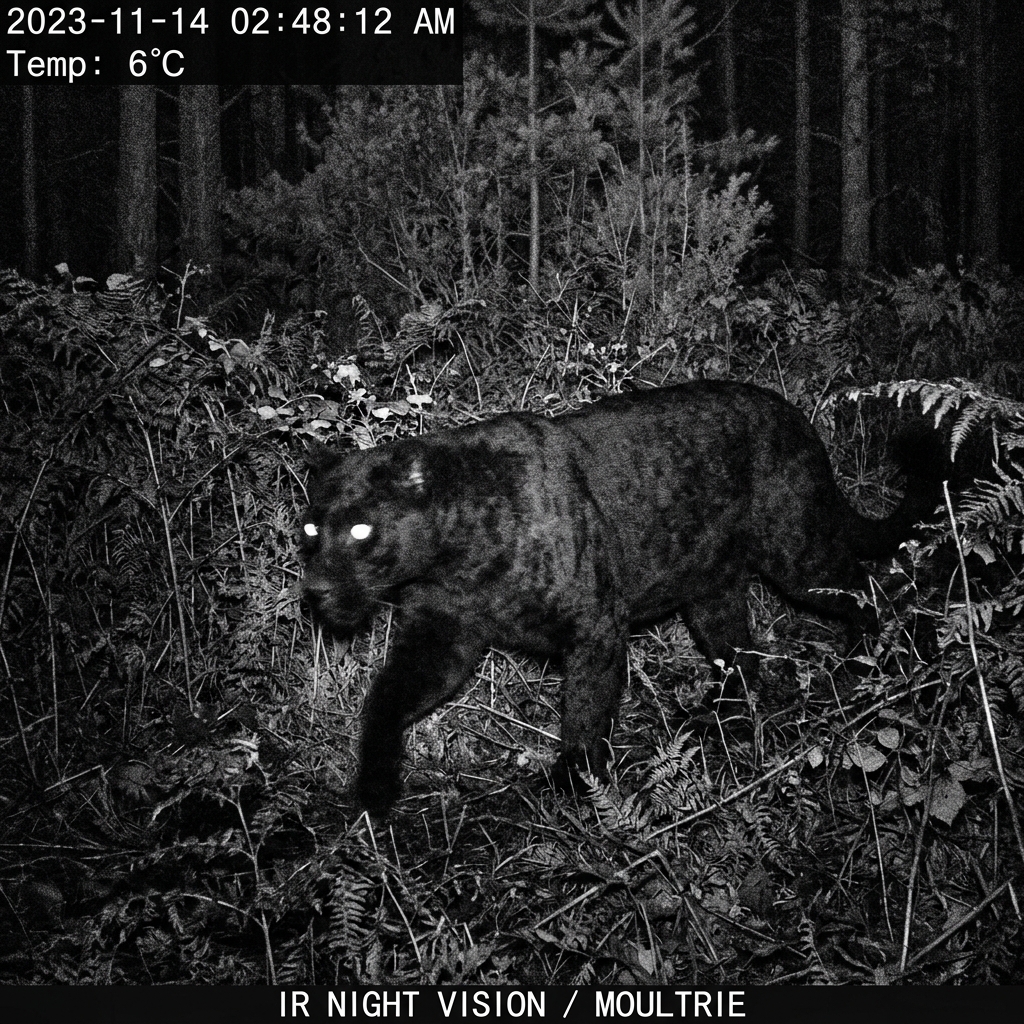
The primary threat to the Scottish wildcat is, ironically, the same process that produced the Kellas cat: hybridisation with domestic and feral cats. As wildcat populations have fragmented and declined through centuries of habitat loss, persecution, and disease, the remaining individuals have increasingly interbred with domestic cats. The result is a continuum of hybrid animals, ranging from those that are nearly indistinguishable from pure wildcats to those that more closely resemble domestic cats with wild ancestry.
Conservation organisations including Trees for Life, the Royal Zoological Society of Scotland, and the Scottish Wildcat Action project have undertaken programmes of captive breeding, habitat restoration, and feral cat management in an effort to secure the species’ survival. The Saving Wildcats project, a partnership involving multiple agencies, has released captive-bred wildcats into the Cairngorms in an effort to bolster the wild population.
The European wildcat, of which the Scottish population represents the northwesternmost range, faces pressures across the continent. In France, Germany, and the Iberian Peninsula, wildcat populations have declined under similar threats of hybridisation and habitat fragmentation, though in several regions, conservation interventions have stabilised or reversed the decline. The Scottish situation is among the most acute, given the small founding population and the density of domestic and feral cats throughout the country.
“If the Scottish wildcat disappears, it will take with it not only a species but a landscape of meaning — the living connection between the natural history of the Highlands and the folklore that gave it voice.” — Cait Sìth Foundation conservation brief, 2019
What Kellas Cats Mean for Conservation
The existence of Kellas cats presents a paradox for conservation. On one hand, these hybrids are evidence of the genetic erosion that threatens the Scottish wildcat with extinction. On the other, they are living animals, adapted to their environment and occupying an ecological niche in the Highland landscape. The question of whether hybrid animals deserve conservation attention in their own right, or whether resources should be focused exclusively on preserving genetically pure populations, remains a subject of active debate among conservation biologists.
The Cait Sìth Foundation takes the position that the Kellas cat, while not itself a conservation priority in the same sense as the pure Scottish wildcat, is of considerable cultural and ecological value. These animals represent a living bridge between the wild and the domestic, between the natural history of the Highlands and the folklore that has interpreted that history for centuries. To understand the Kellas cat is to understand something essential about the relationship between Scottish communities and their landscape — a relationship in which the categories of “wild” and “tame,” “natural” and “supernatural,” have never been as firmly drawn as modern taxonomy would suggest.
The Foundation supports field expeditions that include Kellas cat survey work as a component of broader wildcat monitoring, and encourages visitors to the Highlands to report sightings of unusual large cats through its sighting documentation programme.
Frequently Asked Questions About Kellas Cats
What is a Kellas cat?
The Kellas cat is a large black feline found in the Scottish Highlands, identified as a hybrid between the Scottish wildcat (Felis silvestris grampia) and domestic cats. It was first scientifically documented in 1984 when a specimen was captured near the village of Kellas in Moray, Scotland. Kellas cats are melanistic (black-coated), muscular, and considerably larger than domestic cats.
Are Kellas cats real?
Yes. Unlike the mythological Cait Sìth, Kellas cats are real animals confirmed through genetic analysis. Multiple specimens have been recovered since the first capture in 1984, and the hybrid population is now recognised as a recurring phenomenon in areas where Scottish wildcats and domestic cats share territory.
Are Kellas cats the origin of the Cat Sìth legend?
Many researchers believe so. The Kellas cat’s large size, black colouration, elusive behaviour, and occasional white chest patch closely match descriptions of the Cait Sìth in oral tradition. However, the legend’s supernatural elements — soul-stealing, witch-transformation, and elaborate ritual protections — belong to a cultural dimension that no zoological explanation fully accounts for.
Are Scottish wildcats endangered?
Critically so. Fewer than 100 genetically pure Scottish wildcats are believed to remain in the wild, with some assessments suggesting as few as 35. The primary threat is hybridisation with domestic and feral cats — the same process that produced Kellas cats. Conservation programmes including the Saving Wildcats project have begun releasing captive-bred wildcats into the Cairngorms.
Where can you find Kellas cats?
Kellas cats have been documented primarily in the Moray region of northeast Scotland, in a belt of territory from the Moray coast inland through the Spey valley and into the margins of the Cairngorms National Park. They favour transitional habitats between lowland farmland and upland moor, particularly woodland edge areas and river corridors.
Further Reading
- The Cait Sìth: Scotland’s Phantom Fairy Cat of the Highlands — The Foundation’s comprehensive account of the Cait Sìth legend, from its Gaelic origins to its enduring influence on global black cat superstition.
- Report a Sighting — The Foundation’s documentation programme for unusual large cat encounters in the Scottish Highlands and beyond.
- Plan a Field Expedition — Join Foundation-led survey work in the Highlands, including Kellas cat monitoring and wildcat conservation fieldwork.