
Fewer than 100 pure Scottish wildcats remain in the wild. The species that inspired the Cait Sìth legend now faces extinction from hybridisation.
Fewer than 100 pure Scottish wildcats remain in the wild. The species that inspired the Cait Sìth legend now faces extinction from hybridisation.
In the birch woods and heather moors of the Scottish Highlands, a predator that has inhabited Britain since the end of the last ice age is disappearing. The Scottish wildcat, Felis silvestris grampia, once ranged across the entirety of mainland Britain. It now survives in fragmented populations confined to the remoter reaches of northern and central Scotland, and its numbers have declined to a point where the species stands at the threshold of functional extinction. Conservative estimates place the remaining population of genetically pure wildcats at fewer than one hundred individuals.
This is the animal that, more than any other living creature, corresponds to the physical descriptions of the Cait Sìth (pronounced “caught shee”) preserved in Highland oral tradition. Large, powerfully built, marked with a distinctive tabby pattern rather than the black coat of legend but sharing the imposing size, the arched carriage, and the fierce independence that centuries of testimony ascribe to the fairy cat of the glens. If the Cait Sìth has a biological counterpart, the Scottish wildcat is its most credible candidate – and that candidate is running out of time.
A Species in Crisis
The Scottish wildcat is the last native member of the cat family in Britain. It is a subspecies of the European wildcat, distinguished by its robust build, broad head, bushy blunt-tipped tail marked with thick dark rings, and a temperament that has earned it a reputation as one of the most intractable wild animals in Europe. Unlike feral domestic cats, which descend from domesticated stock and retain behavioural flexibility toward human contact, the Scottish wildcat is wholly wild. It does not tame. It does not habituate. Captive individuals retain their defensive aggression across generations, a trait that underscores the depth of the species’ separation from its domestic relatives.
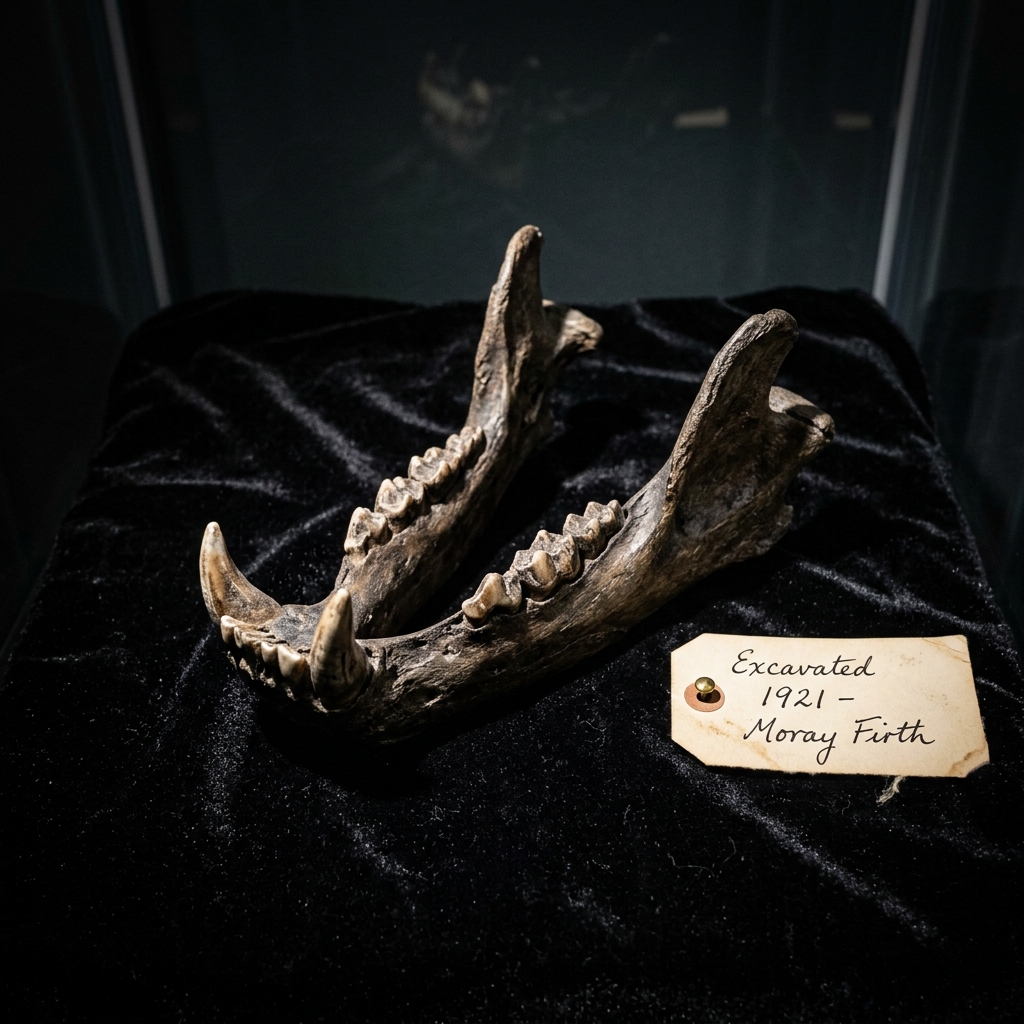
The decline of the Scottish wildcat is not a recent phenomenon. The species was driven from southern England by the medieval period, from Wales and the English Midlands by the sixteenth century, and from the Scottish Lowlands by the eighteenth. By the early twentieth century, wildcat populations were confined to the Highlands, where persecution by gamekeepers and the loss of native woodland had reduced them to scattered remnants.
Two world wars provided an inadvertent reprieve. With gamekeepers called away to military service, predator control lapsed and wildcat populations recovered modestly in the period between 1914 and 1950. However, the mid-twentieth century brought a new and more insidious threat – one that bullets and traps had not posed. The arrival of large numbers of domestic and feral cats in the Highland landscape initiated a process of genetic contamination that now represents the single greatest danger to the species’ survival.
The Hybridisation Crisis
The Scottish wildcat and the domestic cat are interfertile. They can mate and produce viable, fertile offspring. This biological compatibility, which in most contexts would be unremarkable, has become an existential threat.
As domestic cat populations have expanded into rural and semi-rural areas of the Highlands – through farm cats, abandoned pets, and established feral colonies – encounters between domestic cats and wildcats have increased. The resulting hybrids are fertile and can backcross with both parent populations, progressively diluting the wildcat genome. Each generation of hybridisation erodes the genetic distinctiveness that defines Felis silvestris grampia as a taxon.
The Kellas cats documented by the Foundation are themselves products of this hybridisation process – large, melanistic hybrids that combine wildcat and domestic genetics in a stable, reproducing population. The Kellas cat is, in one sense, a testament to the adaptability of feline genetics. In another, it is a warning: a demonstration of how completely hybridisation can transform a wild population into something that is no longer, in any meaningful genetic sense, the species it once was.
Genetic surveys conducted across the Highlands in the 2010s and 2020s have consistently found that the majority of cats identified as wildcats in the field carry some degree of domestic cat ancestry. Truly pure wildcats – individuals whose genomes show no detectable introgression from domestic lineages – are now extraordinarily rare. Some researchers have questioned whether any genetically pure wildcats remain in the wild at all, though the consensus position holds that a small number persist in the most remote and least accessible areas of the central and northwest Highlands.
Conservation Programmes
The recognition of the wildcat’s critical status has prompted a series of conservation initiatives, the most significant of which is the Saving Wildcats programme, a collaborative effort involving the Royal Zoological Society of Scotland, NatureScot (formerly Scottish Natural Heritage), and a network of partner organisations across the Highlands.
The programme operates on two fronts. The first is the establishment of a captive breeding population drawn from the most genetically pure individuals available. This breeding programme, centred at the Royal Zoological Society’s Highland Wildlife Park near Kingussie, maintains a carefully managed studbook and produces kittens for eventual release into the wild. The first releases under this programme took place in the Cairngorms in 2023, marking the first time captive-bred wildcats had been returned to the Scottish landscape.
The second front is the management of the threat landscape in designated Wildcat Priority Areas. These areas, identified across the Highlands from Strathpeffer to Strathbogie, are subject to intensive programmes of feral cat trapping, neutering, and removal. The logic is straightforward: if the hybridisation threat can be reduced within defined geographical zones, released captive-bred wildcats and any remaining wild individuals will have a viable habitat in which to establish self-sustaining populations.
The challenges are formidable. Feral cat populations are resilient and reproductively prolific. Domestic cats from nearby settlements continue to range into wildcat habitat. The landscape of the Scottish Highlands, for all its apparent emptiness, is traversed by roads, dotted with settlements, and increasingly fragmented by development. Creating a zone sufficiently free of domestic cat influence to support a pure wildcat population requires sustained effort measured in decades, not years.
The Folklore Connection
The relationship between the Scottish wildcat and the Cait Sìth tradition is a subject the Foundation has studied extensively. The physical parallels are suggestive, if not exact. The Cait Sìth of tradition is described as black with a white chest blaze; the Scottish wildcat is tabby-striped with no such marking. However, the Cait Sìth’s size, its association with remote Highland landscapes, its nocturnal habits, and its reputation as a creature of fierce and unapproachable independence all map convincingly onto the behavioural profile of Felis silvestris grampia.
It is the Foundation’s position that the Cait Sìth legend and the Scottish wildcat are deeply intertwined – that the lived experience of encountering a large, wild, and profoundly untameable cat in the Highland landscape contributed materially to the body of tradition that the Foundation preserves. The melanistic coat of legend may derive from occasional dark individuals within the wildcat population, from the Kellas cat hybrids that have existed alongside wildcats for centuries, or from the tendency of oral tradition to emphasise and stylise the most striking features of its subjects.
What is certain is that the disappearance of the Scottish wildcat from the Highland landscape would sever one of the last tangible connections between the Cait Sìth tradition and the living world. A Highlands without wildcats would be a Highlands in which the legend could no longer brush against reality – in which the sound of a large cat moving through the heather at dusk could no longer prompt the recognition that something old and powerful still shared the land.
What Can Be Done
The conservation of the Scottish wildcat requires action at multiple scales. At the national level, continued funding and political support for the Saving Wildcats programme and the Wildcat Priority Areas remain essential. At the community level, responsible cat ownership in the Highlands – including the neutering of domestic cats and the prevention of free-ranging – reduces the hybridisation pressure on wild populations.
The Foundation supports these efforts and encourages those who value the cultural heritage of the Highlands to consider the wildcat not merely as a zoological concern but as a living component of the landscape that produced the traditions documented across this site, including the expedition accounts of those who have sought the Cait Sìth in its native terrain.
The Scottish wildcat is not the Cait Sìth. But the Cait Sìth would not exist without it.
Further Reading
- Kellas Cats: Where Legend Meets Reality – The hybrid cats that bridge folklore and conservation science
- The Legend of the Cait Sìth – The spectral fairy cat of Highland tradition
- Expedition Planner – Guidance for those seeking the Cait Sìth in the Highland landscape