
August 17 is Black Cat Appreciation Day. The Cait Sìth Foundation reflects on the creature that made the black cat the most mythologised feline in history.
August 17 is Black Cat Appreciation Day. The Cait Sìth Foundation reflects on the creature that made the black cat the most mythologised feline in history.
Each year on 17 August, Black Cat Appreciation Day marks a moment of collective recognition for the most mythologised domestic animal in human history. The day was established in 2011 by Wayne H. Morris in honour of his late sister, June, whose black cat had been a lifelong companion. It has since grown into an international observance, promoted by shelters and welfare organisations as an opportunity to address the persistent adoption bias against black-coated cats.
The Cait Sìth Foundation (pronounced “caught shee”) regards this annual observance from a particular vantage point. The Foundation’s work is concerned not with the welfare of domestic cats per se, but with the documentation and preservation of the Highland tradition that placed a specific black cat – the Cait Sìth, the great fairy cat of Scottish folklore – at the centre of a body of belief that has shaped how Western cultures perceive black cats to this day. When shelters report that black cats are adopted at lower rates than their lighter-coated counterparts, when a black cat crossing one’s path is still considered unlucky across much of continental Europe, when October marketing materials reach reflexively for the silhouette of an arched black cat – in each of these instances, the Cait Sìth tradition and its descendants are present, operating at a distance of centuries from their origin but with a cultural force that remains measurable.
The Animal That Became a Symbol
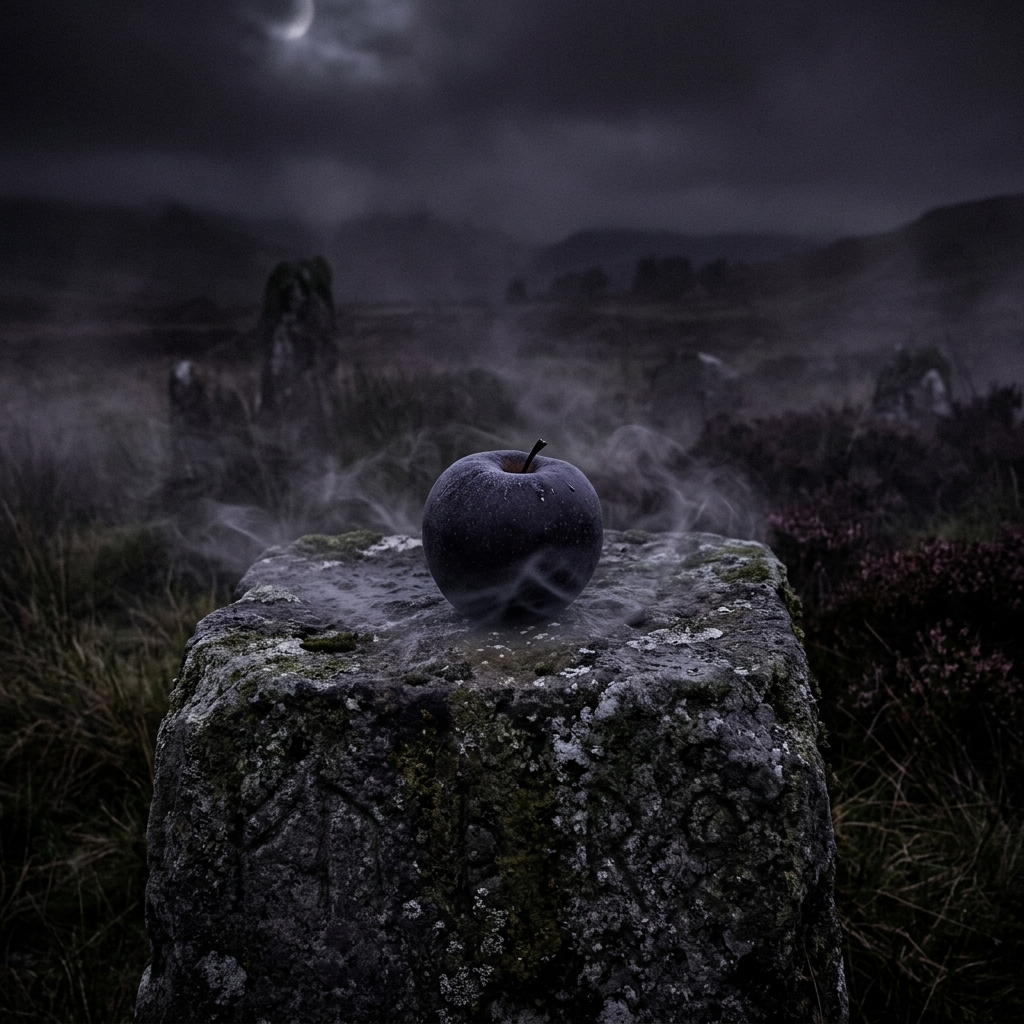
The black cat’s position in Western mythology is unique among domestic animals. No other companion species has accumulated such a dense and contradictory body of symbolic meaning. The black cat is simultaneously good luck and bad, a witch’s familiar and a household guardian, a harbinger of death and a bringer of prosperity. This contradictory status is not accidental. It is the direct inheritance of a tradition in which the black cat was understood to be a creature of the threshold – a being that moved between the mortal world and the Otherworld, carrying blessings or curses depending on circumstance, season, and the disposition of those it encountered.
The Cait Sìth tradition of the Scottish Highlands is not the sole source of Europe’s black cat mythology, but it is among the oldest and most fully articulated. The Cait Sìth was not merely a black cat that appeared in a handful of folk tales. It was a figure with defined physical characteristics, specific seasonal behaviours, documented ritual obligations, and a role within a broader cosmological framework – the world of the Aos Sì, the fairy folk of Gaelic tradition. It had, in effect, a biography, and that biography was transmitted across generations with a consistency that speaks to its importance within Highland culture.
When the Foundation examines the cultural landscape surrounding Black Cat Appreciation Day, it observes a phenomenon that is, at root, an attempt to rehabilitate the reputation of an animal whose reputation was shaped by traditions of which the Cait Sìth is a principal ancestor. The day asks the public to see the black cat as it is – a domestic animal of a particular coat colour, no more or less deserving of affection than any other. The Foundation’s work, by contrast, asks why the black cat needed rehabilitating in the first instance, and traces the answer through centuries of documented belief back to the glens and moorlands of the Highlands.
Why Black Cats Need an Appreciation Day
The statistical evidence for adoption bias against black cats is debated among animal welfare researchers, but the anecdotal testimony from shelters is extensive and consistent. Black cats and dogs tend to spend longer in shelters before adoption. They are photographed less effectively – their features are harder to distinguish in the low-light conditions typical of shelter photography. They are, shelter workers report, less likely to catch the eye of a prospective adopter scanning a row of kennels or browsing an online listing.
The cultural factors underlying this bias are difficult to isolate from the practical ones, but they are not invisible. Centuries of association between black cats and witchcraft, misfortune, and death have deposited a residue of unease in Western culture that operates below the threshold of conscious belief. Few people in the twenty-first century would articulate a sincere conviction that black cats are agents of supernatural malice. Yet the associations persist in idiom, in imagery, and in the vague sense – resistant to rational examination – that a black cat is somehow more charged with meaning than a tabby or a ginger.
The mythology of the black cat across world cultures reveals that this negative association is neither universal nor inevitable. In Scotland, in Japan, in parts of England, and across much of the ancient world, the black cat was and remains a figure of good fortune. The negative valence that dominates popular Western perception is a specific historical development, rooted in the witch trial period of the fifteenth through eighteenth centuries, when the black cat was codified as a witch’s familiar and subjected to the same persecution directed at the human beings accused of practising maleficium.
The Cait Sìth tradition predates this period. In the Highlands, the Cait Sìth was feared and respected, but it was not evil. It was powerful, unpredictable, and demanding of proper observance, but its role in the Samhain economy – blessing the cattle of those who left milk, cursing those who did not – was that of a sovereign enforcing tribute, not a demon wreaking havoc. The witch trial era flattened this nuance, collapsing the Cait Sìth and its analogues across European folklore into a single, simplified symbol of supernatural threat.
Black Cat Appreciation Day attempts to reverse this simplification. The Foundation supports that effort while noting that the reversal will remain incomplete so long as the cultural history that produced the bias remains unexamined.
The Foundation’s Observance
The Cait Sìth Foundation does not host events, issue merchandise, or participate in the promotional activities that typically accompany awareness days. Its observance of Black Cat Appreciation Day takes the form that characterises all its public-facing work: documentation, context, and the provision of the historical record to those who seek it.
On this day, the Foundation draws particular attention to three elements of its archive that bear directly on the cultural status of the black cat.
The first is the tradition of nine lives, whose earliest known English-language expression – in William Baldwin’s 1553 text Beware the Cat – describes a transformation involving a black cat with attributes recognisably derived from the Cait Sìth tradition. The nine lives motif, now a universal commonplace of cat mythology, began as a specific claim about a specific kind of cat, and its evolution from folklore to proverb illustrates the process by which the Cait Sìth’s attributes were generalised to all black cats and, eventually, to all cats without distinction.
The second is the Samhain milk offering, documented extensively in the Foundation’s archival records, which demonstrates a mode of relating to the black cat that is entirely absent from the witch trial narrative: negotiation, reciprocity, and mutual obligation. The household that left milk for the Cait Sìth was not cowering before a malevolent force. It was honouring a compact.
The third is the physical animal itself. The Scottish wildcat, the Kellas cat, and the ordinary domestic cat of black coat and white chest patch – these are the creatures that, encountered in the half-light of a Highland evening, gave rise to a tradition that has outlived the communities that created it. On Black Cat Appreciation Day, the Foundation invites the public to consider the black cat not only as a companion animal deserving of adoption and affection, but as the bearer of one of the most complex and enduring symbolic legacies in Western culture.
The black cat did not ask for its mythology. But the mythology is real, and its consequences – from adoption rates in shelters to the silhouette on the Halloween decoration – continue to shape the animal’s experience of the human world. Understanding where that mythology came from is the first step toward understanding what it costs.
Further Reading
- Black Cats in World Mythology – The global traditions that shaped the black cat’s symbolic legacy
- The Legend of the Cait Sìth – The Highland fairy cat at the root of Western black cat folklore
- The Nine Lives Tradition – How a specific Cait Sìth attribute became a universal feline myth